








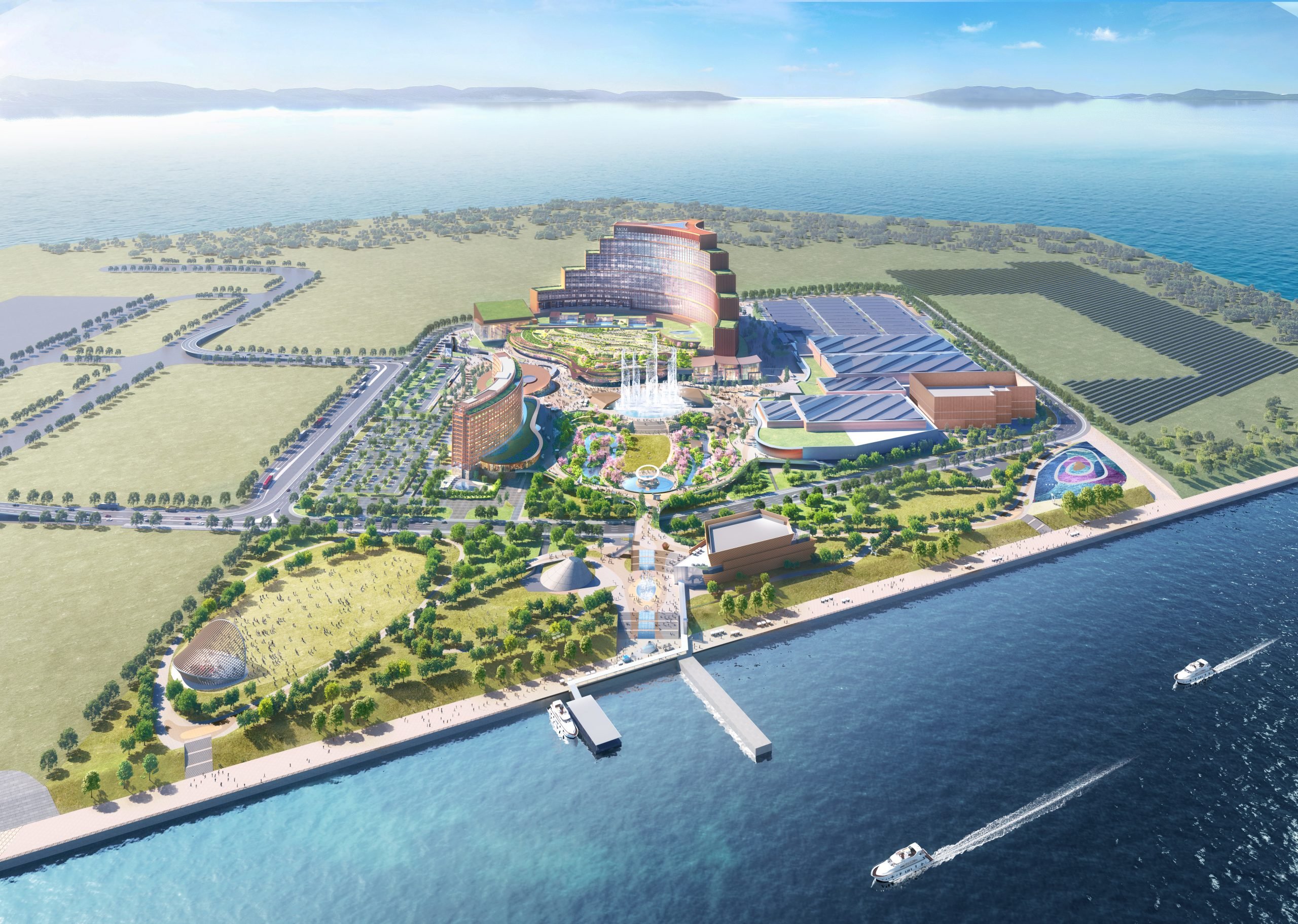
Eminent essayist Pico Iyer admits he doesn’t know much about casinos. Despite Japan’s decade-long kabuki with casino legalisation, Iyer was unaware that an integrated resort is coming to Osaka. Author of A Beginner’s Guide to Japan, Iyer doubts the Kansai region, his home for 38 years, will eagerly embrace casino gambling in its midst.
“I’ve never heard much eager excitement around Japanese people that I know to do with casinos and gambling,” Iyer said at the recent Ubud Writers and Readers Festival in Bali, Indonesia. “They do play mahjong, but gambling isn’t the centre of the culture as it might be in other places.”
Cultural nuances notwithstanding, Japan will open bidding for two more casino licences in May next year.
Yen for the ponies
Iyer acknowledges that Japanese “put money on horses a lot”. Rising Sun punters bet US$22 billion on horse racing last year, more than one-sixth of the global total, according to industry sources.
Millions of Japanese play pachinko, a stylised version of pinball that combines skill, luck and mostly manga and anime themes with thinly veiled gambling. Players trade winnings for prizes that can then be exchanged for cash nearby.
Pachislots, a variation on traditional slot machines with pachinko themes and buttons to stop the three reels (supposedly to inject a skill element), are also in pachinko parlours, primarily storefronts with dozens, if not hundreds, of machines.
Clanging balls
“I think pachinko belongs to the margins of society, and people look down on it or see it as semi-criminal,” Iyer says. “But I’m less aware of it now. When I moved to Japan in 1987, the clang of pachinkos was everywhere, in every shopping mall. Now it’s less than that.”
Pachinko outlets have declined from a year end total of 18,000 in 1995 to 10,258 in 2018 to 6,706 in 2024, according to Japan amusement researcher Tsuyoshi Tanaka. Player losses in 2024 were US$30 billion, greater than gross gaming revenue in Macau casinos that year and triple that of the Las Vegas Strip.
“It’s true that when when my Japanese friends come to California, they’re eager to go to Las Vegas, but not for the gambling,” Iyer says. “They’re going for the shows and for the glitter, whereas I think people from other communities are eager to go to Las Vegas only for one reason.”
Gambling groupthink
Iyer, who chronicled his cross-cultural courtship of his Japanese wife in The Lady and the Monk, says, “Japanese society, to me, is very deeply rooted in its ancient habits and customs and values and therefore slow to change. So I can see that it might take a long time for the society as a whole, which often thinks as a whole, to change its views about casinos and gambling and to get over whatever reservations it may have.”
In 2018, after decades of deliberation and a five-year push by then-prime minister Shinzo Abe, Japan approved the licensing of up to three casinos within integrated resort complexes. Only two of Japan’s 47 eligible local jurisdictions chose to submit bids for three available integrated resort licences, mainly due to vocal public opposition to expanding gambling.
In 2023, the central government approved a single licence for Osaka’s joint venture of Japanese financial giant Orix with Las Vegas and Macau mainstay MGM Resorts International for an IR on Yumeshima Island, site of World Expo 2025 that closed in October.
Outlier Osaka
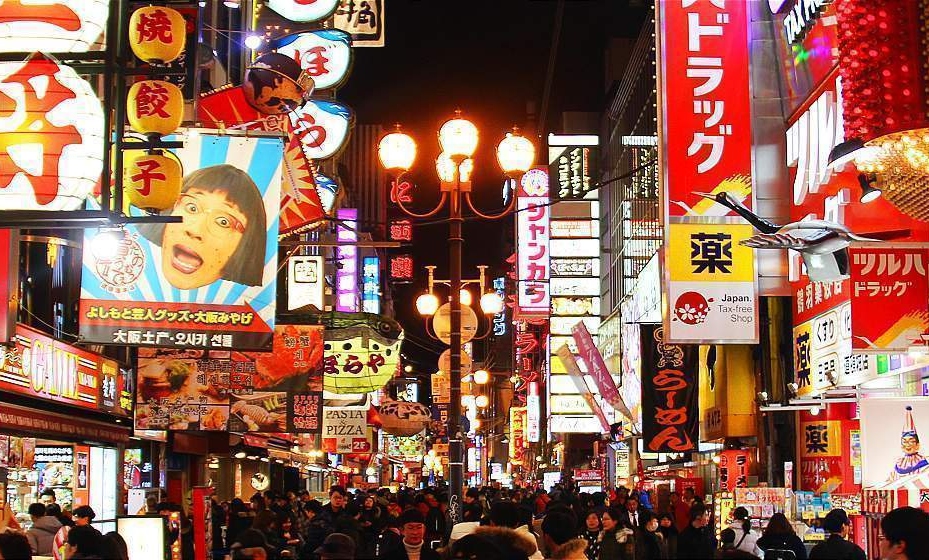
MGM Japan president and CEO Ed Bowers calls Osaka “the most Chinese” city in Japan.
“It’s the most boisterous, loudest, least shy part of Japan,” Iyer says, contrasting it with Japan’s nearby ancient cultural capital. “It’s Kyoto turned on its head in some ways.”
Iyer notes that Chinese comprise the largest chunk of tourists to Japan. Last year, visitors from the PRC, Taiwan and Hong Kong accounted for 18.4 million visitors, 43% of arrivals, despite a steep drop after Japan’s prime minister Sanae Takaichi indicated in November that a mainland China attack on Taiwan could be viewed as a threat to Japan.
Tourist arrivals to Japan topped 10 million for the first time in 2013 and approached 43 million last year. As in other regions that have experienced rapid tourism growth, the influx of foreigners evokes mixed feelings among Japanese.
‘Unquiet, disorderly and disobedient’
“The presence of foreigners in Japan is much more disruptive than it would be anywhere else, especially Singapore or Macau, because Japan is based not only on the notion of everybody sharing the same assumptions, but on the notion of everybody being silent, orderly and obedient. Foreigners tend to be unquiet, disorderly and disobedient.” Iyer says. “So it’s a real problem.”
Deer in the city of Nara about 30 kilometres (18 miles) east of Osaka illustrate the clash, Iyer says. Prime Minister Takaichi accuses foreign tourists of mistreating Nara’s 1,500 sika deer, once revered as divine messengers, that have roamed the city since the eighth century. Injuries in deer interactions have escalated in recent years, likely due to tourists teasing deer with food to snap selfies.
“Tourism in Japan has changed everybody’s life,” Iyer, whose subjects range from the Dalai Lama to
globalisation to singer-songwriter-Zen monk Leonard Cohen, says. “For all the economic rewards, it’s made most lives a lot harder. So there’s a really huge ambivalence, and anything that seems to be aimed at a foreign clientele could easily be unpopular,” he says of IRs.
“If you’ve been to Japan recently, every person is making an AirBnB or a kimono rental place or coffee place entirely aimed at foreigners. So on an individual basis, they’re very keen to make a living off of the sudden flood of foreign visitors. All the menus are suddenly in English, and they’re full of gluten-free, vegan options.
“But on a collective level, and at the scale of a casino, people really might be unsettled that this is the tip of the iceberg. Japan has always had ambivalent feelings towards China, [viewed as] its greatest threat for hundreds of years. So something that seems perhaps aimed at the Chinese market and a large number of people, however sequestered, is going to be problematic.”
Unwanted visitors
Japanese authorities principally pitched integrated resorts as a tourism promotion vehicle. “To me, as a longtime foreign observer,” Iyer says, ”it speaks directly to the central conundrum in Japan right now, which is the government really wants to build foreign tourism. It wants 30 million foreign visitors now to become 60 million – and most individuals really want the opposite and were much more comfortable a few years ago when it was 2 million or 5 million.
“Everyone, on the individual basis, they appreciate the value in revenue, but I think they’re suspicious of the government’s motives. They suspect that the drive for revenue because of Japan’s economic problems is at the cost of the lives that they love and their comfort.
“In Japan, elderly people can’t go to their local ramen joint because it’s filled with people like you and me. They can’t get around: they have to wait an hour for buses because the buses and subway trains are so filled with foreign visitors, principally.
Hard core culture
“And so the most vulnerable parts of Japanese society are suffering a lot from the sudden influx. The cool young kids are going to be excited about it, financially and culturally, but the hard centre of Japan is going to be unsettled, generally, by the foreigners and by the notion of a casino, because they know it’s not part of Japanese culture. They’ll accept something they’ll incorporate as part of Japanese culture that’s not going to damage things, but the casino might seem much more morally or socially disruptive.”
Iyer suggests, “It will be easy to keep [the casino] quiet and sort of push it under the carpet, which Japan is very good at, pushing unsavoury things under the carpet. Assuming that most people don’t know about it, then it could go fine.” He expects gamblers will come to the casino, Japan’s treasury will get gaming tax and other new revenue, while “the typical Japanese doesn’t know about it”.
However, it’s doubtful MGM and Orix want their US$9 billion entertainment complex in the world’s third largest economy pushed under the carpet, hidden from Japan’s 120 million citizens.
Muhammad Cohen is a former US diplomat and current iGB Asia editor at large. He has covered the casino business in Asia since 2006, most recently for Forbes, and wrote Hong Kong On Air, a novel set during the 1997 handover about TV news, love, betrayal, high finance and cheap lingerie.
Original article: https://igamingbusiness.com/casino/longtime-japan-resident-pico-iyer-expects-cool-reception-for-osaka-casino/