








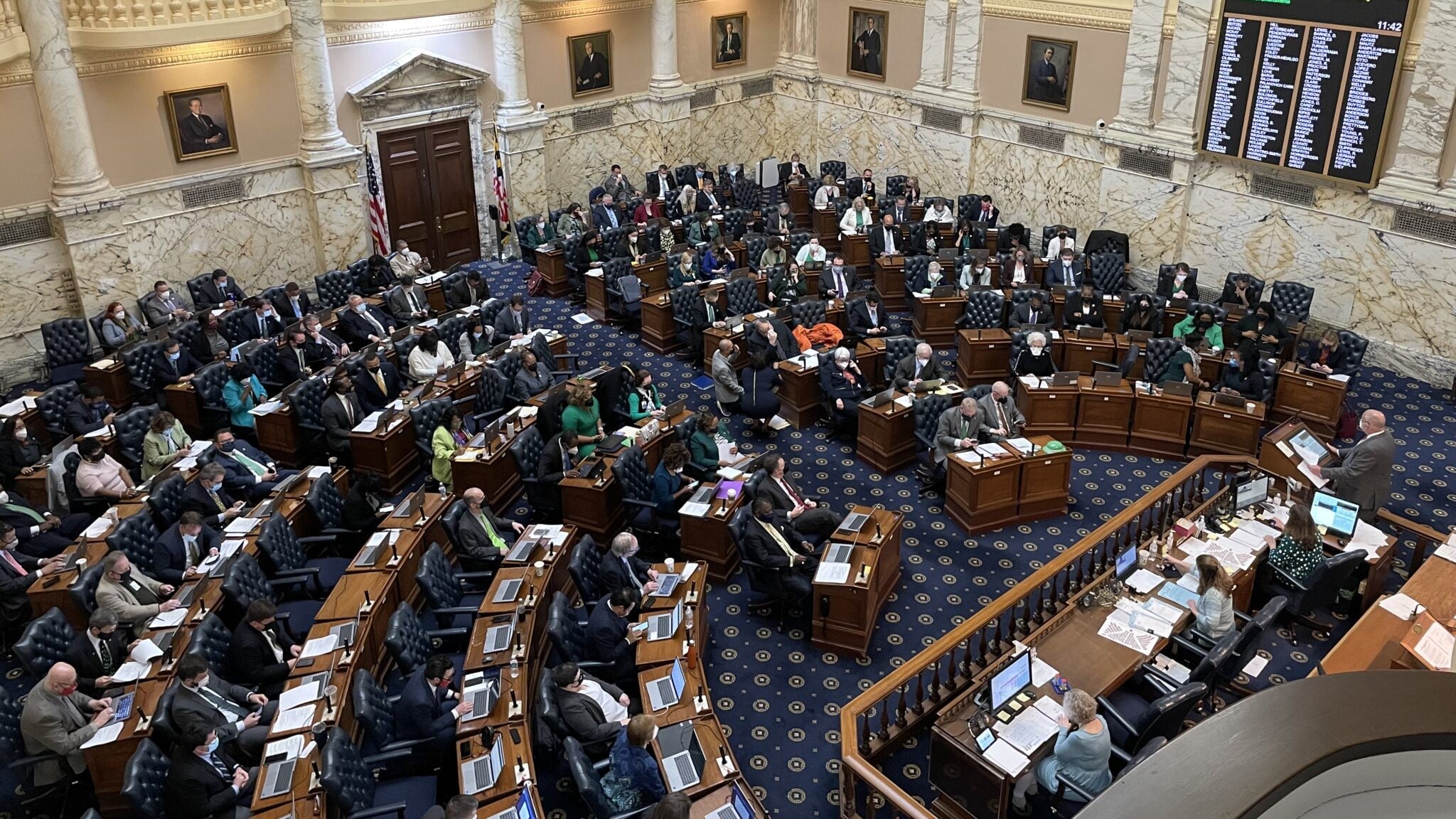
Maryland is making a legislative push to ban sweepstakes casinos, with legislation filed in both the Senate and House.
Maryland Lottery and Gaming is backing the legislative push, sponsoring legislation in both chambers. The filings revive an effort that stalled in the House last year after a similar measure advanced through the Senate.
Maryland bills target sweepstakes casino activity
The Maryland proposals follow the path of earlier legislation introduced in 2025. SB 0860 moved through the Senate Budget and Taxation Committee and later passed the full Senate. The companion measure, HB 1140, did not receive a vote in the House after the Ways and Means Committee did not bring it up.
HB 295 and SB 112 require certain license applicants and licensees to disclose business relationships with entities tied to sweepstakes-style interactive gaming. The proposed language also directs regulators to deny or revoke licenses under specified conditions, including restrictions tied to revenue sources connected to certain jurisdictions.
“For the purpose of prohibiting certain persons from operating, conducting, or promoting certain interactive games; requiring certain license applicants and licensees to report to the State Lottery and Gaming Control Commission any business relationship with certain persons known to support, operate, conduct, or promote certain interactive games,” the bill reads.
Maryland Lottery and Gaming would be “required to deny certain license applications and revoke certain licenses under certain circumstances,” which extends to “prohibiting the Commission from issuing a license to certain persons or allowing the person to commence or continue operations if the person or an affiliate of the person knowingly accepts revenue that is directly or indirectly derived from certain jurisdictions.”
Legislative activity continues in other states
Maryland’s filings come after widespread state activity targeting sweepstakes casino-style platforms in 2025. Six states, including California, New York, and New Jersey, passed legislation banning those operations.
In Virginia, lawmakers have submitted bills that would target sweepstakes platforms while also moving toward legalizing internet casino gaming.
Dual-currency model described in other debates
The language used by lawmakers who successfully banned sweepstakes casinos in other jurisdictions often focused on operators’ use of a “dual-currency” approach.
Under a dual-currency system, people use “sweeps coins” gifted with the purchase of social “gold coins.” Gold coins may also be obtained through login bonuses and mail-in requests. After using the gold coins through gameplay, sweeps coins can be redeemed for cash prizes and gift cards.
Maryland’s filings do not specifically reference the dual-currency model.
Louisiana effort and enforcement actions
Efforts to bar sweepstakes operations have taken different forms in other states.
Last year in Louisiana, Sen. Adam Bass introduced legislation that sought to ban sweepstakes casinos by targeting operators and their “affiliates.” The proposal passed unanimously in both the House and Senate in the state and included provisions threatening fines and jail time for suppliers and providers, in addition to operators.
Gov. Jeff Landry later vetoed the legislation, saying the Louisiana Gaming Control Board could address the issue.
In July, Louisiana Attorney General Liz Murrill issued a written opinion stating sweepstakes casinos were illegal. In September, the Department of Revenue sued operators VGW and WOW Vegas seeking nearly $45 million in taxes, interest, and unpaid penalties.
Prior Maryland testimony raised concerns
In Maryland, a ban proposal filed last year by Delegate Eric Ebersole drew opposition testimony in the House Ways and Means Committee from Josh White, speaking for sweepstakes operator VGW, and attorney Jeff Ifrah, representing the Social and Promotional Games and Association (SPGA).
They argued the legislation was too broad and could have unintended consequences for non-gaming companies that use sweepstakes promotions in marketing.
If Lottery and Gaming’s current bills are heard in committee, sweepstakes advocates could raise similar concerns. The language could affect suppliers and payment processors already licensed in the state, similar to arguments raised during consideration of Ebersole’s proposal.
“Social Plus” rebrand and regulatory pitch
Sweepstakes operators rebranded their games as “Social Plus” late last year under the Social Gaming Leadership Alliance (SGLA). The group said operators and platforms are “equipped with robust consumer protections, including age and identity verification, responsible social gameplay tools, geolocation, and secure handling of consumer data.”
The SGLA has sought to engage lawmakers in discussions about regulation aimed at establishing the sector as a regulated industry that would eventually pay state taxes. Those efforts did not result in favorable outcomes in 2025.
Original article: https://www.yogonet.com/international/news/2026/01/14/117116-legislative-push-in-maryland-seeks-ban-on-sweepstakes-casinos-with-regulator-39s-support