








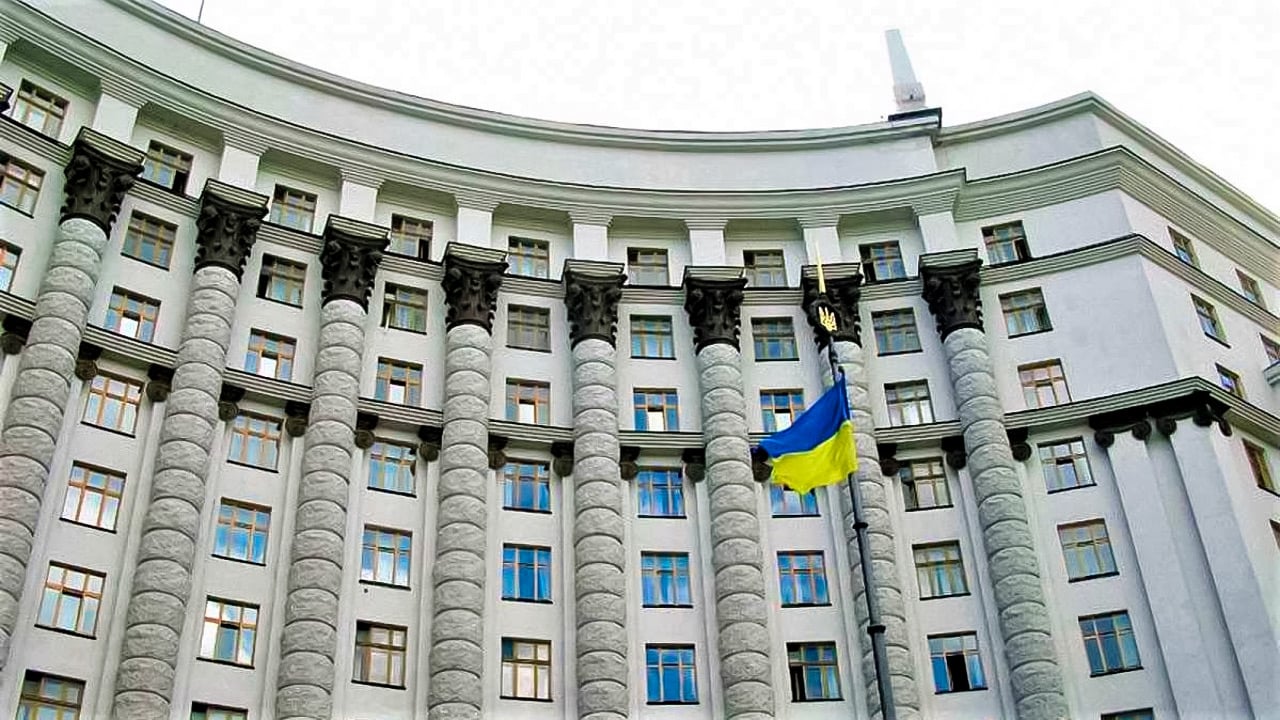
Ukraine has blocked access to prediction market platform Polymarket, deeming its activities as unlicensed gambling under national law.
Five years after Ukraine reopened the gambling sector through legislation approved in 2020, regulators have ordered a new wave of website blocks. The most notable inclusion is that of Polymarket, as officials target operators accused of offering online betting services without Ukrainian licenses.
Ukraine’s National Commission for the Regulation of Electronic Communications (NCEC) issued the directive on December 10, 2025, under Resolution No. 695. The order requires internet service providers to restrict access to online resources that organize, conduct or facilitate gambling without a valid license.
Following the ruling, the domain polymarket.com was added to Ukraine’s public register of blocked websites, effectively restricting local access.
PlayCity recommendations drive enforcement list
The action followed input from PlayCity, Ukraine’s gaming regulatory agency, which has assisted the government in blocking more than 4,500 websites identified as illegal gambling businesses. In December, PlayCity recommended that another 200 casino and gambling websites be blocked, including Polymarket.
Ukrainian officials have cited concerns about unlicensed operators. Ukraine generally permits online sweepstakes casinos, which face scrutiny in the US, while online casinos licensed in Ukraine include Stake, Lucky Goldfish, and ROX Casino.
PlayCity maintains a list of banned gaming websites that ISPs within Ukraine must uphold. While Polymarket is now restricted, other prediction markets, including Kalshi, Gemini, and PredictIt, remain accessible in the country.
Polymarket flagged over war-linked contracts
Regulators have also criticized Polymarket for facilitating contracts tied to geopolitical outcomes connected to Russia’s war in Ukraine. Polymarket was founded in 2020 by Shane Coplan and allows users to buy and sell shares tied to the outcome of real-world events, with prices indicating market-implied probabilities rather than fixed odds.
Polymarket continues to run contracts asking when a ceasefire will be reached. More than $13 million has been staked on a ceasefire by January 31, 2026, with current shares suggesting a 3% chance. A ceasefire by March 31, 2026, which has over $8 million traded, implies a likelihood of 12%. A ceasefire by the end of the year, a market with $6 million in exchanges, suggests 44% odds.
Another contract indicates a 28% chance that President Volodymyr Zelensky is out as Ukraine’s president by the end of the year, with more than $1 million traded.
Last year, Polymarket ran nearly 100 contracts involving the Russia-Ukraine war, with nearly $100 million traded globally on outcomes.
Russia and Ukraine have been at war since February 2022, when Vladimir Putin launched a “special military operation” to “demilitarize and denazify” Ukraine.
Crypto-based platform faces wider scrutiny
Polymarket has an estimated valuation of $8 billion. Bets are placed using the USDC stablecoin on the Polygon blockchain, enabling transactions and settlements to be publicly verifiable.
Polymarket is restricted across 33 other countries, including France, Germany, the United Kingdom, Italy, Poland, Belgium, Iran, Singapore, Iraq, North Korea, Thailand, Taiwan, and Australia.
In the United States, Rep. Ritchie Torres is preparing the Public Integrity in Financial Prediction Markets Act of 2026, which would restrict insider trading on prediction markets by federal legislators, political appointees, and executive branch employees who possess nonpublic information gained through their official roles.
Separately, Tennessee’s sports betting regulator recently ordered Kalshi, Polymarket, and Crypto.com to halt the offering of sports event contracts to state residents.
Original article: https://www.yogonet.com/international/news/2026/01/15/117153-ukraine-adds-polymarket-to-banned-website-register-in-illegal-gambling-crackdown