








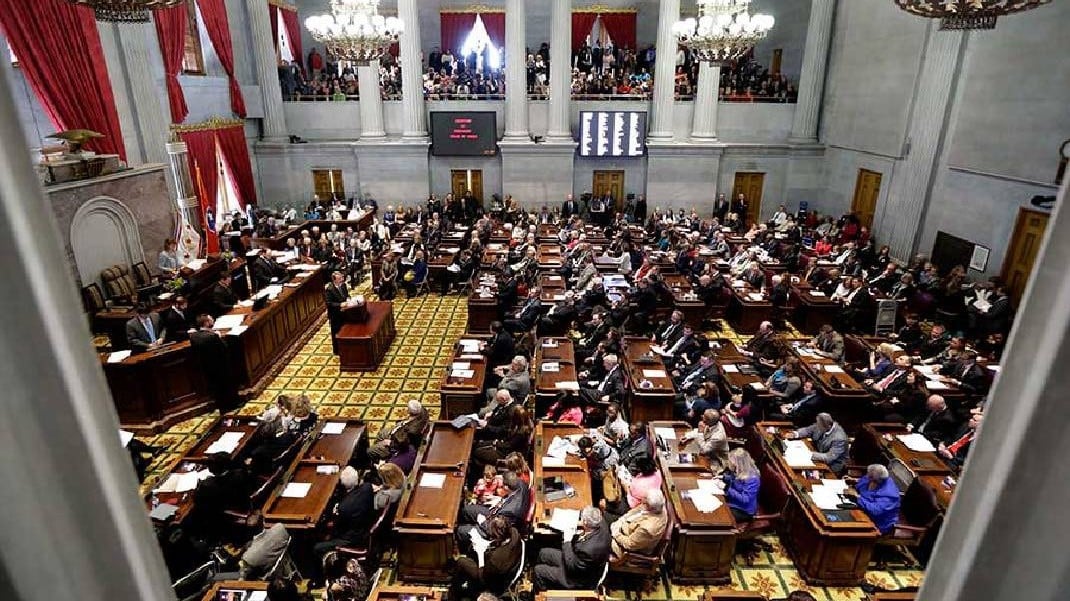
Tennessee lawmakers are advancing legislation that would restrict access to mobile sports betting on and near public college campuses, amid heightened scrutiny following a major betting scandal involving NCAA Division I basketball games.
House Bill 1768 and Senate Bill 1831, filed by Rep. John Ray Clemmons and Sen. Jeff Yarbro, aim to prohibit interactive sports wagering within the physical and surrounding boundaries of public higher education institutions. If passed, the measures would prevent students and others from placing legal bets via licensed sports betting apps while on campus or in adjacent residential areas.
Under Tennessee law, land-based sportsbooks are not permitted. Wagering is only allowed through mobile platforms licensed by the state. This setup could complicate access for students at universities such as the University of Tennessee, Belmont University, and Middle Tennessee State University if the new restrictions are enacted.
The bills define campus zones as including not only the main contiguous property of the institution, but also any non-contiguous or satellite properties used for student housing or communal purposes within a one-mile radius of the main campus. Properties used solely for classrooms, administration, or storage are excluded.
Additionally, the legislation addresses off-campus venues hosting college sporting events. According to the proposed language, “a licensee shall prohibit such access at the sports venue for the entire calendar day on which such sport or sporting event is conducted,” effectively blocking wagering from those locations as well.
The proposals follow the indictment of over two dozen individuals linked to a point-shaving scheme that affected 17 NCAA Division I men’s basketball programs and games in the Chinese Basketball Association. The scandal has intensified concerns around the integrity of college sports and the role of legalized betting.
In response to similar issues, NCAA President Charlie Baker has reiterated the association’s position on banning college prop bets. After the scandal emerged, Baker contacted state gambling commissions to stress the need for eliminating player-specific wagers, with some discussions also touching on removing first-half over/under bets.
Tennessee is among 13 jurisdictions where college prop bets are not allowed. Other states, including New Jersey, Connecticut, and Illinois, restrict betting on in-state college teams.
Efforts to relax betting rules at the national level have also been reversed. A proposed NCAA rule change that would have permitted student-athletes to place legal bets on professional sports was withdrawn following objections from lawmakers and NCAA officials.
Meanwhile, legislators in Tennessee have introduced a bill aimed at banning sweepstakes casinos statewide, targeting platforms that offer casino-style games through virtual currency systems. House Bill 1885, brought forward by Representative Scott Cepicky, seeks to classify such operations as illegal online gambling and to bring them under the scope of the Tennessee Consumer Protection Act of 1977.
Original article: https://www.yogonet.com/international/news/2026/01/28/117331-tennessee-bill-seeks-to-block-mobile-sports-betting-access-on-college-campuses