








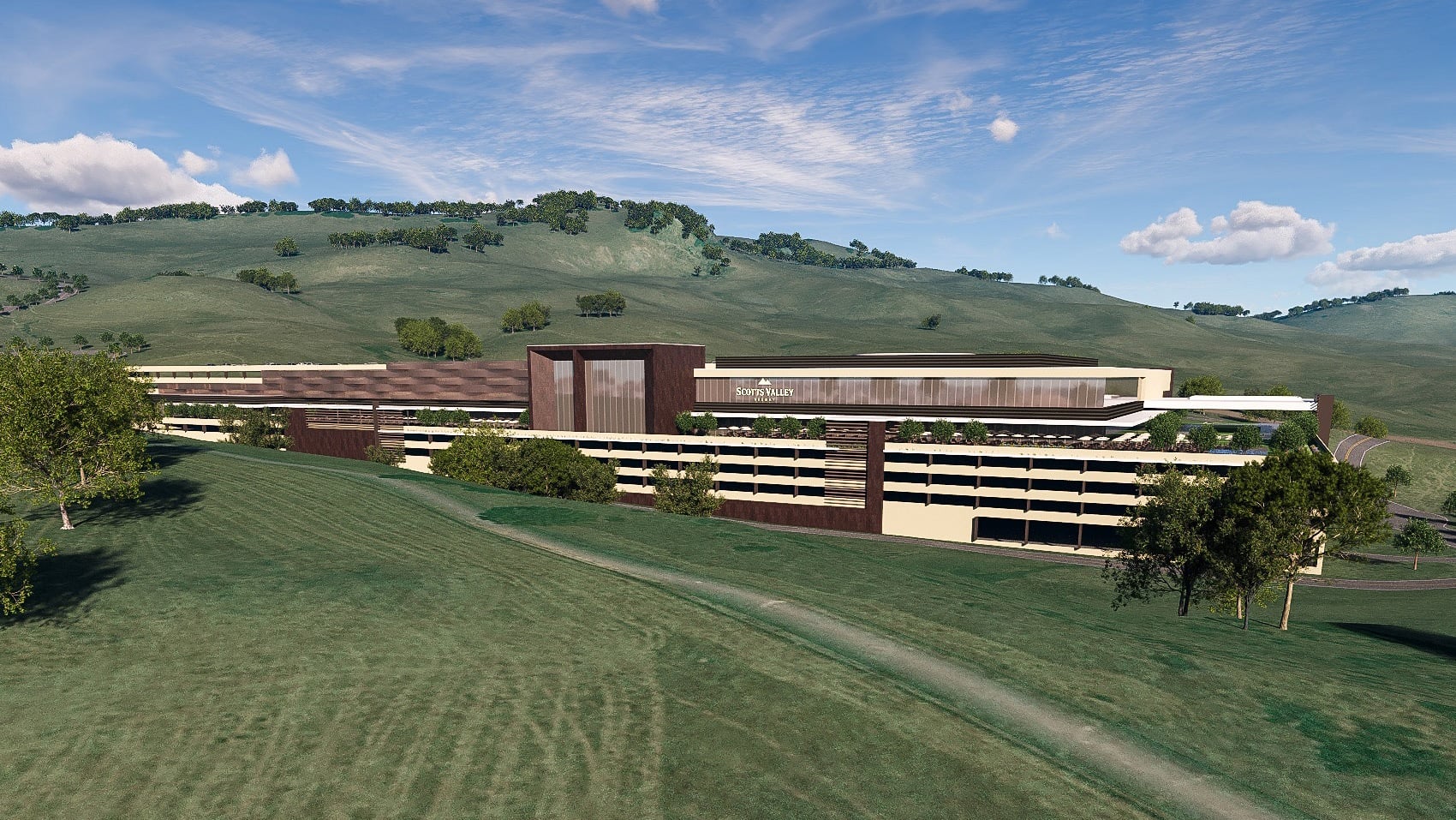
A legal dispute over a planned $700 million casino in Vallejo has escalated into a multi-tribal court fight, with the Scotts Valley Band of Pomo Indians moving to dismiss lawsuits filed by tribes that operate competing gaming facilities across Northern California.
The Times-Herald reported that the Scotts Valley Band of Pomo Indians filed its final brief Friday seeking dismissal of three federal cases brought against the US Department of the Interior. The lawsuits contest the department’s January 10, 2025, decision to place 160 acres of land in Vallejo into trust for gaming, tribal government operations, and housing.
The cases were filed by the tribes that own Cache Creek Casino, San Pablo Lytton Casino, and Thunder Valley Casino Resort. Each lawsuit challenges the trust designation that would allow Scotts Valley to proceed with its proposed casino development.
Scotts Valley filed motions to intervene and to dismiss in the following actions:
- Lytton Rancheria of California v. US Department of the Interior (No. 1:25-cv-1088-TNM)
- United Auburn Indian Community v. US Department of the Interior (No. 1:25-cv-00873-TNM)
- Yocha Dehe Wintun Nation v. US Department of the Interior (No. 1:25-cv-00867-TNM)
In its filings, Scotts Valley argues that the trust land is required for tribal governmental functions, economic development, and the provision of housing and services for its members.
“These lawsuits are an attempt to prevent the Tribe from exercising its sovereign right to pursue economic development on its rightful ancestral land,” Scotts Valley Band of Pomo Indians Chairman Shawn Davis said Friday. “Two of the opposing casinos are located more than an hour from our land and have no reason to interfere with a fair and binary process except to protect their own financial interests. We will not bend under the knee of greed. It’s wrong. We will continue to fight valiantly to defend the Tribe’s rights, history, and economic future – both for the Scotts Valley and Vallejo.”
Scotts Valley plans to develop a $700 million casino that would operate 24 hours a day, seven days a week. The proposed project includes 24 single-family residences, a tribal administration building, a parking garage, and a 45-acre biological preserve area.
The site is located within and adjacent to the Vallejo city boundary in Solano County, near the intersection of Interstate 80 and Highway 37.
The proposed casino remains subject to ongoing federal review. In late 2025, US District Judge Trevor McFadden of the District of Columbia rejected Scotts Valley’s attempt to invalidate the reconsideration process tied to the project’s gaming eligibility.
That same week, the Department of the Interior stated that its initial approval of the casino proposal may have relied on “legal error.” The department said evidence submitted by local tribes and other parties “raises questions” about whether the Vallejo site qualifies for gaming. McFadden said Scotts Valley “would be ill-served” by relying on the prior gaming eligibility determination while reconsideration remains underway.
Multiple tribes have questioned the project, including the Yocha Dehe Wintun Nation, the Kletsel Dehe Wintun Nation, the Lytton Rancheria of California, and the United Auburn Indian Community. In January, the tribes issued a joint statement expressing “serious concern” about a temporary preview casino while the Interior Department continues its review.
Yocha Dehe Wintun Nation Chairman Anthony Roberts said in September that one dispute involves claims regarding ancestral ties to the Vallejo site. Scotts Valley has cited Chief Shuk Augustine, a Pomo leader who died in 1903, as having lived in Vallejo and used the land. Yocha Dehe disputes that claim.
“Let me be clear. Augustine never lived in Vallejo and never used or occupied lands here,” Roberts said in September. “He had no ties to this land and the surrounding counties. Scotts Valley’s claims about Augustine are simply false. Factually incorrect. As descendants of those who truly did occupy these lands, it’s insulting and hurtful to hear these claims. Even worse is the fact that we gave the Department of the Interior the true facts well in advance of its January decision. But the decision says on its face that our evidence was not considered. The agency just ignored it.”
Original article: https://www.yogonet.com/international/news/2026/02/09/117504-scotts-valley-tribe-seeks-end-to-multitribal-lawsuits-over-vallejo-gaming-site