








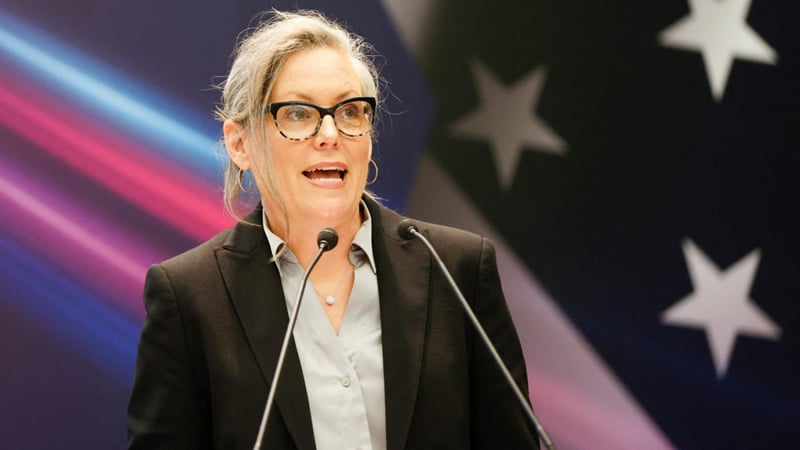
Arizona Governor Katie Hobbs has proposed sharply raising the state’s sports betting tax rate for the largest operators, joining a growing list of U.S. states seeking to extract more revenue from the fast-growing market.
Hobbs’ $17.7 billion budget plan calls for increasing the sports betting tax to 45% for operators handling at least $75 million in monthly wagering volume, up from the current flat 10% rate in place since Arizona launched legal sports betting in 2021. The existing levy ranks among the lowest in the country.
Three operators – BetMGM, DraftKings, and FanDuel – surpassed the $75 million threshold in November 2025, according to state data.
The governor’s office estimates the higher rate could generate $150 million a year, funding that would be counted among $950 million in “uncertain funds” relied upon in the budget to help offset potential federal cuts.
The proposal faces significant political hurdles. Republicans control both chambers of the Arizona legislature, and the state constitution generally requires a two-thirds supermajority to approve measures that raise state revenue. Hobbs, a Democrat, and her administration have argued the levy is structured as a fee, not a tax, and therefore may not trigger the supermajority requirement, according to Axios.
Arizona’s proposal comes as lawmakers nationwide look to sports betting to help close budget gaps. In West Virginia, legislators have introduced a bill to raise the sports betting tax rate from 10% to 25%, while several other states have approved increases in recent years.
Industry observers have warned that higher taxes could weaken regulated markets at a time when legal operators face growing competition from unregulated platforms and prediction markets.
Recent increases elsewhere have often fallen short of governors’ initial proposals. Illinois moved from a flat 15% rate to a tiered system topping out at 40%, later adding per-bet fees. Maryland lawmakers raised the rate to 20% after rejecting a proposal to double it, while New Jersey approved a smaller increase than initially sought by its governor. Louisiana lifted its rate to 21.5%, and Ohio increased its tax to 20% in 2023 but declined to raise it further last year.
Illinois state representative Jehan Gordon-Booth cautioned lawmakers that higher rates may not deliver the expected returns. “What you think you’re going to get from raising taxes, you’re not going to get,” Gordon-Booth said.
Similar warnings have come from regulators. Christopher Hebert, chairman of the Louisiana Gaming Control Board, has said pushing taxes too high risks driving operators out of regulated markets.
Original article: https://www.yogonet.com/international/news/2026/02/17/117599-arizona-governor-proposes-steep-sports-betting-tax-hike-for-large-operators