








At ICE Barcelona 2026, Galaxsys used the global stage not just to showcase its expanding portfolio but to engage in deeper strategic conversations about performance, flexibility, and long-term scalability. As operators navigate a landscape defined by regulatory shifts, rising acquisition costs, and evolving player expectations, the focus is increasingly on content that delivers measurable engagement.
In this exclusive interview with Yogonet, Teni Grigoryan, Chief Sales and Partner Management Officer at Galaxsys, shares insights on the growing role of crash and instant games, the rising importance of personalization and localization, and how operators are balancing simplicity with monetization flexibility in 2026.
Now that ICE Barcelona is over, which conversations stood out most for Galaxsys compared to previous editions of the show? How would you describe the overall mood of the market at ICE this year: cautious, opportunistic, or somewhere in between?
ICE Barcelona never disappoints, and this year was no exception. It was highly productive for our sales and partnership teams, with conversations that felt more strategic and focused.
The most meaningful conversations weren’t just about adding new content, but about how content performs within an operator’s wider ecosystem. Operators came to the table well-prepared, with clear objectives around differentiation, retention, and long-term scalability.
In terms of market mood, I’d describe it as measured optimism. There’s caution around costs and regulation, of course, but also a strong appetite for innovation that delivers fast results. Operators are no longer experimenting for the sake of novelty; they’re investing where they see proven engagement and operational flexibility.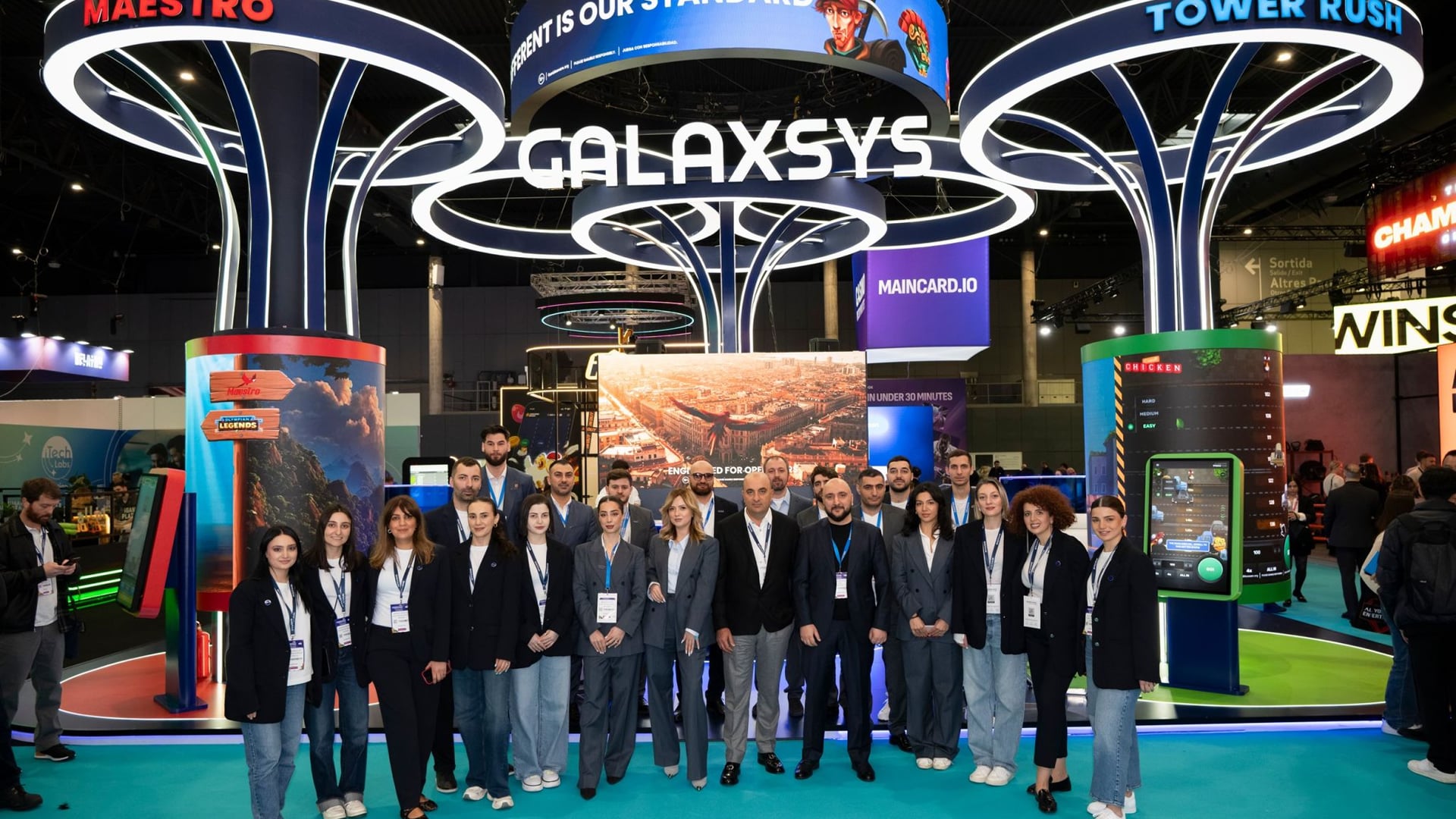 With a portfolio that includes titles like Maestro, Tower Rush, and Chicken Crash, what qualities are operators prioritizing now: speed, simplicity, social features, or monetization flexibility?
If I had to summarize it, operators are prioritizing clarity with flexibility. Speed and simplicity will always remain essential, especially for crash and instant games, but they are no longer enough on their own.
Operators want games that are easy to understand at first touch, yet flexible enough to be adapted to different markets, player segments, and promotional strategies. Monetization flexibility is increasingly important, particularly when paired with social or competitive elements that drive repeat engagement.
For example, titles like Chicken Crash and Tower Rush balance fast gameplay with strong visual identity and adaptable mechanics.
Crash games have been a major focus in the industry as of late, and Galaxsys is also expanding in this vertical. Based on the feedback you received at ICE, how are operators currently positioning crash titles within their broader portfolios?
We saw strong interest in using crash titles as entry-point games, particularly because of their simplicity, fast pace, and ability to engage users from the very first session. Many operators see crash games as an effective way to introduce new audiences to their platforms and build early engagement.
At the same time, we received a lot of requests around our slot portfolio, which we expanded last year and will continue to develop throughout the year, with partner feedback playing a key role in shaping that roadmap.
This combination of interests highlights how Galaxsys is positioned as a well-rounded games studio that can deliver across multiple verticals, whether it’s instant games, crash titles, or slots, depending on what each partner needs.
Personalization and built-in retention tools are positioned as key trends for 2026. How mature do you feel operators really are when it comes to deploying these features effectively today?
The maturity is definitely growing, and as providers, we also carry a clear responsibility to deliver tools that genuinely help operators activate these strategies, not just talk about them.
At Galaxsys, we’ve been investing heavily in practical promotional features such as bonus systems, leaderboards, and bank mechanics, all designed to support engagement directly at the game level. In addition, we work closely with partners on skinning and customization, helping them align games more closely with their brand and audience.
The industry is clearly moving in the right direction, but adoption and sophistication vary widely. Real progress will come from making personalization simpler to deploy, easier to manage, and more effective in delivering long-term value.
Are operators asking for deeper customization at the game level, or are they still relying more heavily on platform-side retention mechanics? From a provider’s perspective, where is the balance between personalization and keeping games accessible and easy to understand?
Operator needs vary significantly from market to market, which is why we focus on offering a broad and flexible portfolio rather than a one-size-fits-all solution.
In some regions, operators are pushing for deeper game-level customization, while in others they still rely more heavily on platform-side retention mechanics. The balance depends on local player behavior, product maturity, and acquisition channels.
From our perspective, the key is delivering games that feel instantly familiar while still offering depth. For example, Chicken Crash leans into character-driven gameplay, helping create an emotional connection and a more memorable experience.
Tower Rush, on the other hand, introduces strong social and competitive elements and has become one of our biggest traffic drivers and a clear favorite among affiliates, delivering both strong user acquisition and long-term retention.
A big part of its success comes down to instant familiarity. Players coming from social gaming immediately understand the concept: every floor is a decision, and each step forward represents a clear risk–reward choice, giving players a sense of control.
ICE brings together a truly global audience. Which markets generated the most interest in Galaxsys’ localized and multi-currency capabilities? And how granular are operator expectations now when it comes to localization?
ICE really highlights how global the industry has become. This year, we saw particularly strong interest from Europe, LATAM, Asia, and parts of Africa, where localization and multi-currency support are no longer seen as added value, but as a baseline requirement.
Operator expectations have definitely become more nuanced. We are well beyond language and currency alone. Today, localization increasingly means understanding how players engage, how fast they expect gameplay to move, how risk is perceived, and what visual or thematic cues feel familiar in each market.
That said, the level of depth varies by region. Some markets are pushing strongly toward culturally adapted mechanics and pacing, while others still prioritize reliability and familiarity. The key shift is that operators now expect providers to be flexible enough to support both approaches.