








The Brazilian Senate has approved legislation that trims federal tax incentives while increasing the tax burden on betting operators and fintechs, a move the government says is aimed at fiscal balance but which has drawn strong warnings from the gaming industry about unintended consequences.
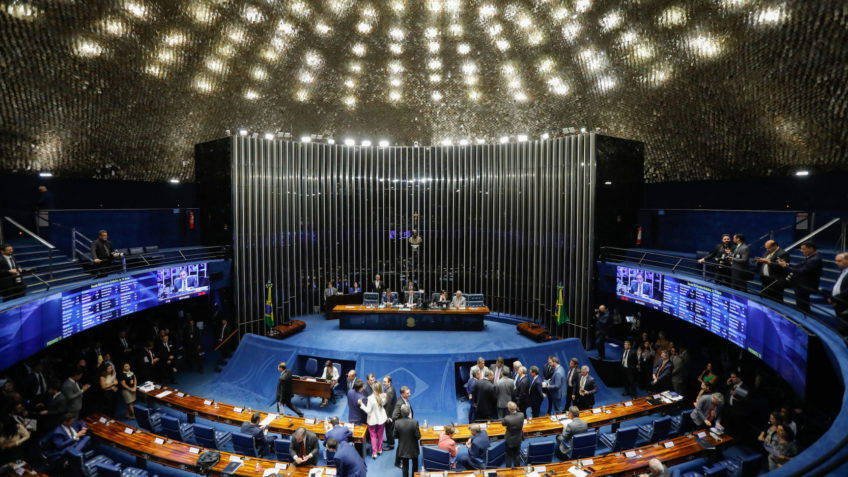
The bill, PLP 128/2025, was passed late Wednesday night (17) by a margin of 62 votes in favor and six against. It now moves to the President of the Republic for sanction. The proposal reduces a range of federal tax benefits by 10% and introduces a gradual increase in taxation on betting operators over the coming years.
Under the new framework, the levy on bets will rise from the current 12% to 13% in 2026, 14% in 2027 and 15% in 2028.
Senator Randolfe Rodrigues (PT-AP), the government’s leader in Congress and rapporteur of the bill, issued a favorable opinion and defended the measure during the plenary debate. He argued that tax incentives granted by the federal government require continuous scrutiny to prevent distortions and growing inequality.
“This is therefore a proposal that points to a reduction of incentives, greater transparency and control over amounts, moving toward greater fiscal responsibility and, at the same time, combating distortions caused by the lack of evaluation of such measures [the granting of incentives],” Randolfe said.
The legislation establishes that benefit cuts will vary depending on the type of granting mechanism used and introduces new rules on transparency and performance monitoring within the framework of the Fiscal Responsibility Law.
Most of the changes are scheduled to take effect on January 1, 2026, although provisions subject to a 90-day waiting period, including the reduction of tax exemptions, the taxation of betting operators, and increases in the Social Contribution on Net Profit (CSLL), will follow a different timetable.
At the request of the federal government, the Chamber of Deputies had earlier amended the text to include measures to raise revenue as part of efforts to balance the 2026 budget. One of the central elements was the increase in betting taxation, with the additional revenue split evenly between social security and healthcare initiatives.
The bill also tightens oversight of the betting sector. Entities that advertise unauthorized betting platforms, as well as institutions that continue to operate with unlicensed operators after formal notification, may be held jointly liable with the betting companies for unpaid taxes.
Opposition lawmakers criticized the move as a tax hike disguised as social policy. Senator Rogério Marinho (PL-RN), the opposition leader in the Senate, accused the government of raising taxes under the pretext of helping lower-income groups.
In the days leading up to the vote, Finance Minister Fernando Haddad met with the Speaker of the Chamber, Hugo Motta, and the bill’s rapporteur in the lower house, Aguinaldo Ribeiro, to secure the inclusion of provisions reducing federal tax incentives. The government has argued that without the additional revenue from higher betting taxes, deeper spending cuts would be unavoidable, particularly affecting public policies and parliamentary earmarks.
Beyond PLP 128/2025, Congress is currently considering three other proposals that would increase taxation on betting. These include the creation of CIDE-Bets under the Anti-Evasion Bill, a constitutional amendment proposal aimed at channeling betting funds to public security, and Bill 5,473, which would raise the betting operators’ tax rate to 18% starting in 2028.
The Senate’s decision has triggered strong reactions from the gaming sector. Executives, experts, and industry associations warn that higher taxes could undermine the sustainability of Brazil’s recently legalized betting market and push millions of users toward unregulated platforms.
On social media and in public statements, industry representatives caution that as many as 25 million Brazilians could migrate to illegal betting sites if operating in the regulated market becomes economically unviable.
According to sector representatives, licensed operators have already invested millions of reais to comply with Brazil’s regulatory requirements. They argue that further increases in operating costs may have the opposite of the intended effect, reducing tax collection as bettors shift to platforms that operate outside the law.
Original article: https://www.yogonet.com/international/news/2025/12/19/116898-brazilian-senate-backs-higher-levies-on-betting-as-industry-warns-of-illegal-market-surge