








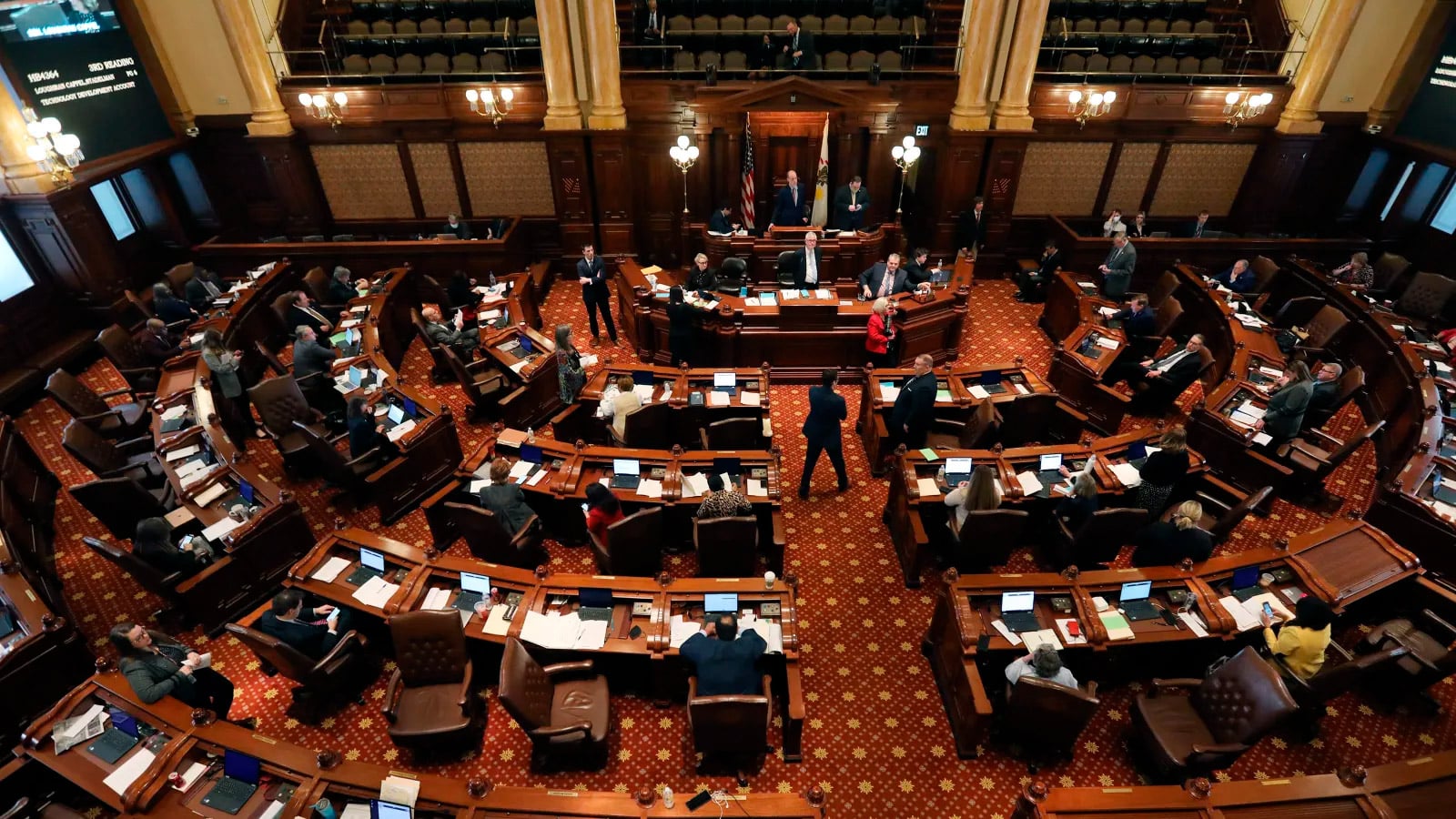
Illinois Representative Edgar Gonzalez has reintroduced a measure to legalize online casino gaming, following an earlier failed attempt in 2025. House Bill 4797, filed on Monday, seeks to establish the Internet Gaming Act, enabling the Illinois Gaming Board (IGB) to license operators to offer up to three branded online casino platforms, or “skins.”
The proposal would permit licensed operators to provide online slots, table games, live dealer games, and poker to residents aged 21 and above. Operators would face a 25% tax on gross gaming revenue. The bill outlines a $250,000 initial licensing fee, with annual renewals priced at $100,000.
It features provisions for responsible gambling, including mechanisms for deposit and wagering limits and options for temporary or permanent self-exclusion. To address industry resistance and workforce impact concerns, Gonzalez’s bill maintains language aimed at discouraging job cuts by potential licensees.
According to the bill text, “The Board may not issue an Internet gaming license to an owner’s licensee or organization licensee that has reduced the size of its workforce by 25% or more since February 28, 2020. The Board may not renew the Internet gaming license of any owner’s licensee or organization licensee that has reduced the size of its workforce by 25% since the date its last Internet gaming license was issued or renewed.”
Illinois already operates a regulated and heavily taxed online sports betting market. However, past proposals to expand into online casino gaming have faced resistance from some in-state casino stakeholders. PENN Entertainment, which operates three casinos in Illinois, testified in opposition to a similar bill last year. That bill, like its Senate counterpart, failed to progress past committee review.
The new measure also prohibits municipalities from imposing their own taxes on online casino revenue. “This privilege tax is the exclusive tax in relation to Internet gaming,” the bill states. “No local government of this State, including home rule municipalities, may impose or levy taxes on adjusted gross gaming revenue.”
Under the proposal, 95% of tax revenue would be allocated to the state’s general fund, with 5% distributed among local governments.
The issue of gaming taxation remains contentious in Illinois. The state recently transitioned from a 15% flat tax on online sports betting to a graduated rate peaking at 40%, and implemented a per-wager fee on sportsbooks.
Meanwhile, the City of Chicago proposed a 10.25% tax on wagers placed within city limits. That move prompted a lawsuit from five major sportsbooks, FanDuel, DraftKings, BetMGM, Fanatics, and bet365, challenging the city’s authority to impose such a tax.
House Bill 4797 also allows for the IGB to enter agreements with other jurisdictions to enable multi-jurisdictional internet gaming, including online poker, provided those agreements comply with federal and state law. In a separate action this week, Gonzalez filed another bill specifically targeting online poker legalization.
Though no recent vote has been held on legalizing online casino gaming in the state, Illinois Attorney General Kwame Raoul signaled support for the idea during a public appearance at the National Council of Legislators from Gaming States (NCLGS) Summer Meeting last July, saying he expected iGaming to be legalized in Illinois in the future.
Original article: https://www.yogonet.com/international/news/2026/02/04/117453-illinois-lawmaker-revives-online-casino-legalization-debate-with-bill-filed-in-house