








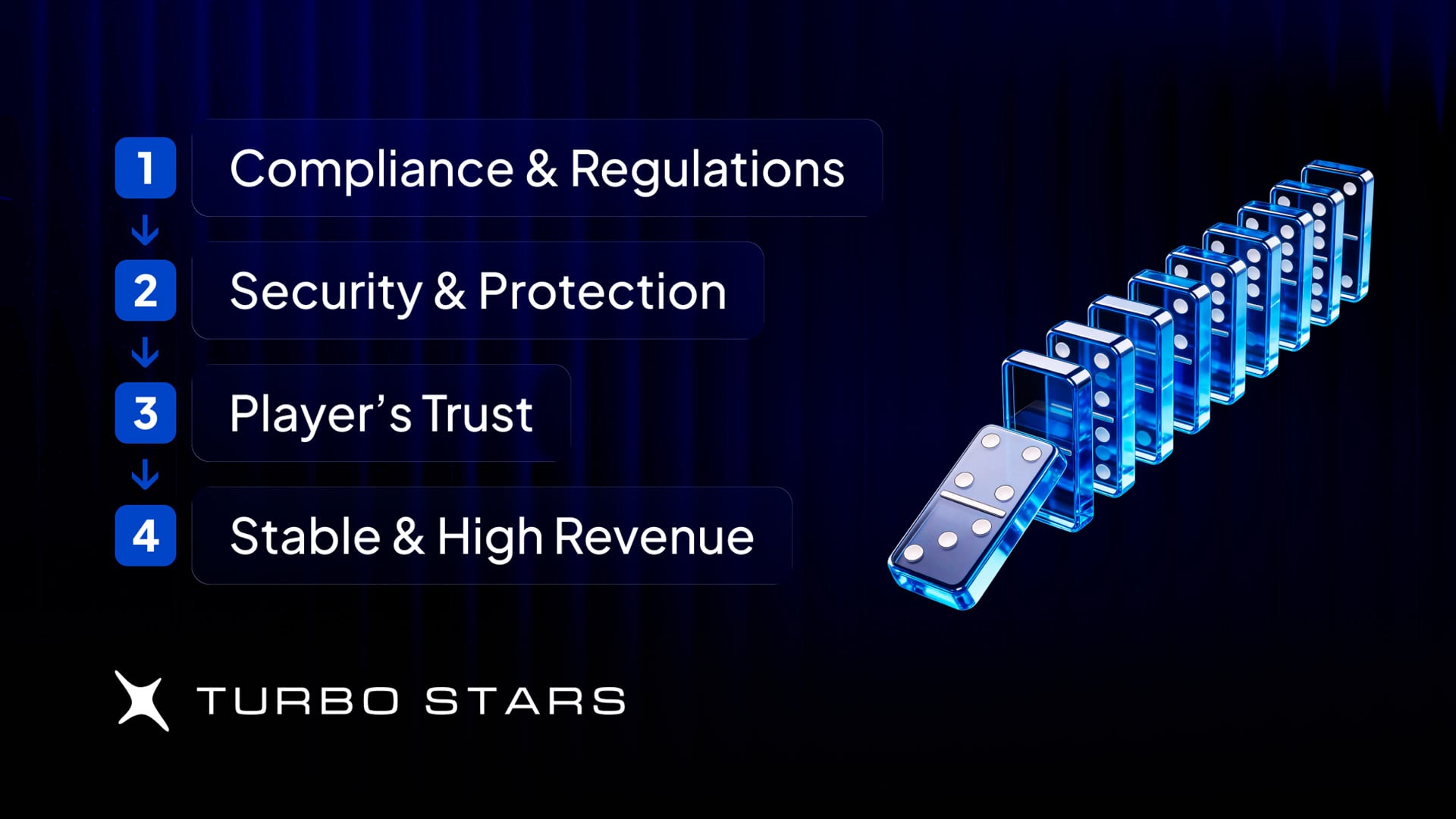
In this article, B2B iGaming platform and sportsbook provider Turbo Stars explores how regulatory compliance, often seen as a constraint, can become a decisive competitive advantage for operators willing to adapt early in newly regulated markets.
When a market introduces gambling regulation, some operators may see it as a closed door. Indeed, any compliance changes or new procedures can increase time-to-market, negatively affecting revenue and incurring high costs in legal fees and compliance teams. Ongoing audits never stop. It’s no surprise that some operators start looking toward less-regulated markets, where the barriers are lower, and the questions are fewer.
And this final decision is what defines a serious operator from a one-day casino owner.
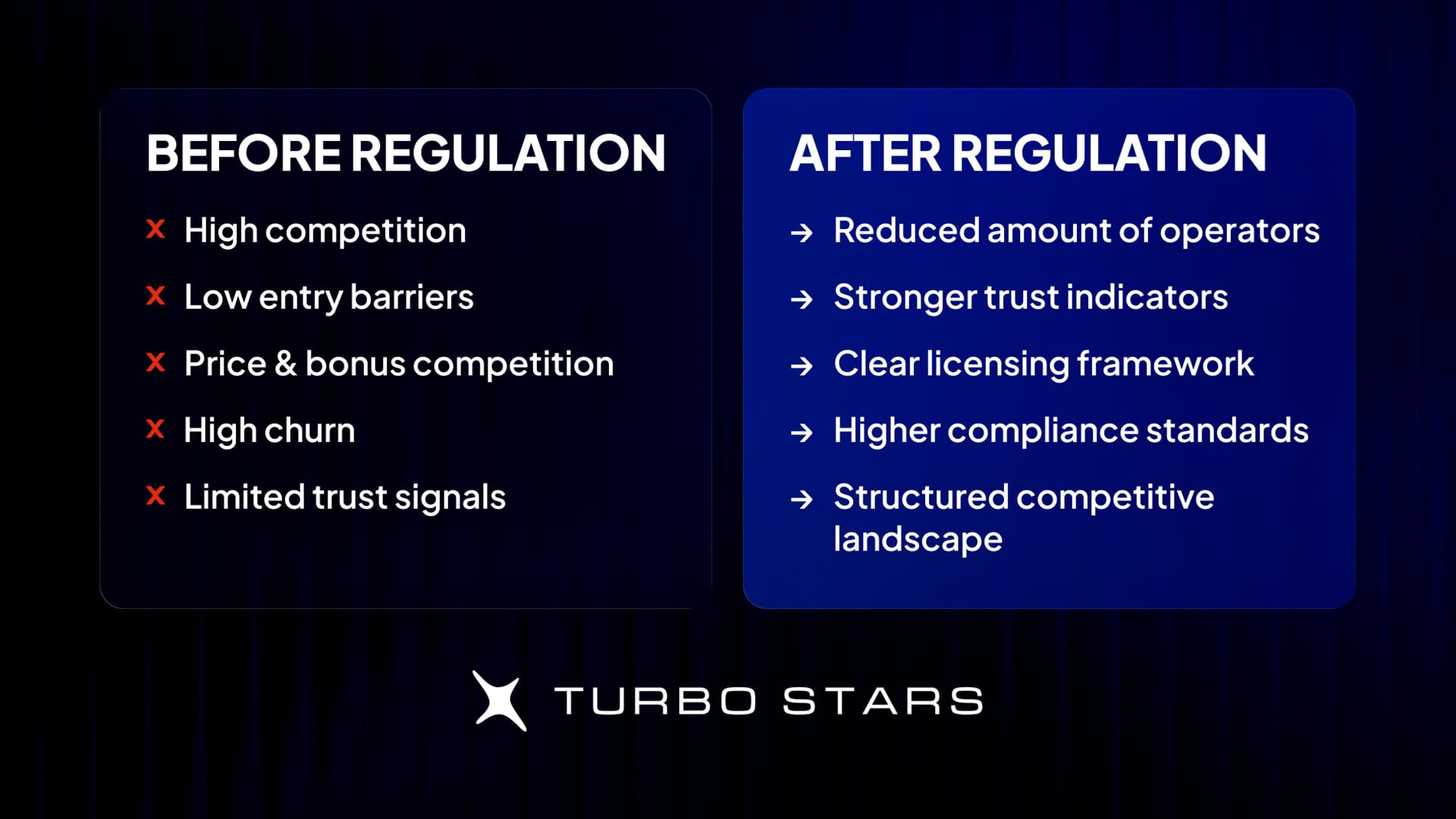
Here’s what actually happens when a market regulates: weak operators leave, not being able to follow new standards. Meanwhile, those who manage to adapt early get access to players with real money and real trust, taking full advantage of the official market flow.
As a technology partner to operators in regulated and emerging markets, Turbo Stars has a close-up view of how compliance reshapes the competitive landscape. Here’s what consistently happens when markets make the shift.
Trust translates to revenue
In regulated markets, there’s a consistent pattern — players tend to deposit more confidently and stay longer. The reason is security, which is fundamental for building trust.
People don’t give their money away easily, and when they do, they need credibility. Put simply, players deposit more when they feel secure and protected, and generally it has nothing to do with marketing campaigns or bonus offers. The brand needs to be legitimate first.
When a player sees a license badge from a recognized regulator, they realize — this operator will not disappear with their money because someone’s watching them — and it changes the player’s behavior.
This feeling of safety grants legitimate operators higher conversion rates, larger first deposits, and longer player lifecycles compared to unlicensed competitors operating in the same markets.
Regulation as a competition filter
New regulations kill market noise by changing the roster.
Operators who aren’t equipped for compliance leave. They weren’t built for regulated environments — and outside of them, they only become less reliable.
That changes competition in both quality and quantity.
First, every barrier to entry — license fees, audits, certifications, local requirements — becomes a barrier to new competitors entering later, protecting market positions for those already inside.
Second, it pushes licensed operators to improve. They can’t rely on aggressive acquisition alone (like in unregulated markets). They need to retain players, build trust, and deliver entertainment that keeps people coming back. Competition shifts from “who spends more on traffic” to “who entertains this traffic better.”
Early movers capture markets
Another thing Turbo Stars learned working with operators in emerging markets: the ones who start early don’t just win the launch — they set the pace for the entire market.
When new licensing requirements are announced, the majority of operators freeze, as the paperwork looks overwhelming, the timeline is uncertain, and the legal costs are unclear. Brands spend weeks or months trying to understand what these regulations mean for their business before they even consider moving forward.
That paralysis creates a window.
Those who decide to stay in the market and commit to moving through the process suddenly get an opportunity to be first to go live, launch marketing, and connect with the audience, acquiring the first wave of newly available players in a market that just became significantly less crowded.
Brazil’s 2024 licensing window demonstrates exactly how timing creates advantage.
When the licensing process opened on May 21, Kaizen Gaming (Betano) filed on May 26 — only five days later. Over 50 of the 113 total applicants waited until the final day (August 20) to submit. When the market launched on January 1, 2025, only 14 received full authorization to operate immediately; another 52 needed to correct compliance issues first.
As a result, Betano captured 24.88% market share by late 2024 and remains the market leader post-regulation.
The opportunity window
The trend toward market regulation is clear, and standards are rising. Latin America, parts of Africa, and emerging Asian markets are introducing licensing frameworks. What was grey market territory two years ago is becoming a regulated space today.
The question isn’t whether to adapt — operators who see compliance as an obstacle have already missed the point.
It’s whether to adapt early, while the window is open, or late, when the best partnerships, traffic sources, and market positions are already taken. Those who see compliance as a competitive advantage move early, capture market share while competitors hesitate, and build positions that become harder to challenge as barriers to entry rise.
Original article: https://www.yogonet.com/international/news/2026/02/18/117624-regulation-is-not-the-enemy-how-compliance-can-be-your-competitive-advantage