








During the next edition of Regulating the Game, set to take place in Sydney from March 9 to 11, regulators, operators and industry experts will gather to tackle some of the most pressing questions facing the gambling sector. From AML/CTF reform and safer gambling outcomes to the growing challenge of black and grey markets, the conference arrives at a moment when the effectiveness of regulatory frameworks and the operational maturity of the industry are under increasing scrutiny.
Paul Newson, Principal at Vanguard Overwatch and Founder of Regulating the Game, believes the sector is approaching a defining test: whether regulated markets can deliver meaningful integrity and consumer protection outcomes while remaining competitive enough to keep players within legal channels.
In an exclusive conversation with Yogonet, he reflects on the themes shaping this year’s programme, the role of innovation and leadership in the industry’s evolution, and what delegates should take away from three days of debate in Sydney.
With Regulating the Game 2026 taking place next week in Sydney, why is this year’s edition particularly important for regulators and industry stakeholders?
RTG 2026 matters because the sector is confronting a defining practical test: whether regulated markets can deliver integrity and harm outcomes at a standard that sustains public confidence without driving consumers and demand into black and grey channels.
The black-market question is no longer theoretical. It is the clearest signal of where regulatory settings, product constraints, enforcement posture and consumer experience are misaligned.
In that context, regulatory credibility and industry performance are tightly linked. Outcomes depend not only on rules and supervision, but on whether governance, culture and systems across the market can reliably deliver what regulation is trying to achieve, while keeping regulated offerings competitive enough to hold market share.
AML/CTF reform and safer gambling outcomes are central themes of the programme. Why are these areas demanding such urgent attention right now?
Because they sit at the intersection of public confidence, market legitimacy and operational capability.
From a regulatory standpoint, AML/CTF and safer gambling are core to measurable outcomes: preventing criminal exploitation, reducing harm and sustaining trust in regulated settings.
From an industry standpoint, they are also the domains most dependent on mature capability: clear governance, disciplined risk appetite, data and systems that work, and cultures that intervene early rather than late.
RTG’s focus is to move beyond “policy settings in the abstract” and examine what actually works in practice: where controls fail, where implementation strains, and how practices can be strengthened so that regulatory objectives are met without creating avoidable distortion.
Regulating the Game 2025
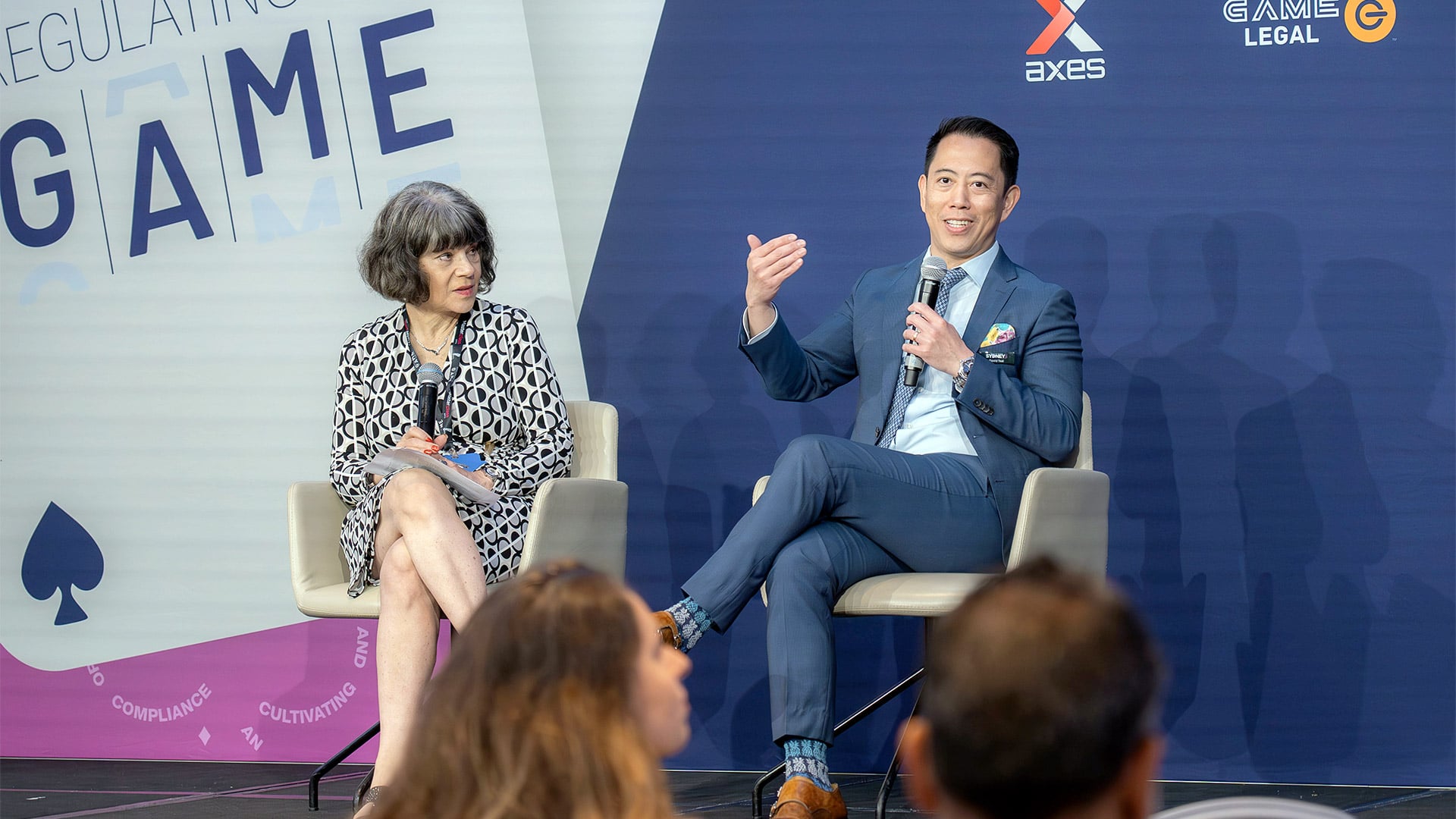
The opening programme features “Pitch!” at the Sydney Opera House. What is the significance of creating a dedicated innovation forum within a regulatory conference?
Pitch! is deliberately designed as a competitive ideas forum inside a regulatory conference, because innovation in this sector is most useful when it is tested, compared and contested in front of people who understand both regulatory intent and operational reality.
The tension is the point.
On one side are incumbents already delivering at scale: operators, platforms, suppliers and service providers who have deployed systems across high-volume customer interactions, multi-brand and multi-channel environments, legacy stacks, complex third-party dependencies and demanding governance expectations. Their advantage is proven execution — what works in production, under scrutiny and with real constraints.
On the other side are disruptors and applied researchers, often faster and more focused, and sometimes structurally better positioned to challenge assumptions, simplify workflows and introduce new detection or intervention methods that incumbents may struggle to adopt quickly.
Pitch! creates a structured arena where both are held to the same standard: outcome impact, feasibility, scalability and governance fit.
It also makes a critical point explicit. RegTech does not replace leadership, judgement or culture — it amplifies them. The best technology strengthens early detection, consistency, documentation and escalation discipline, but only when accountability is clear and the organisation is willing to act on what the system surfaces.
So the significance of Pitch! isn’t innovation theatre. It is a forum that pressures both camps: incumbents to keep lifting, and disruptors to prove their solutions can survive contact with scale, regulation and real-world delivery.
Regulating the Game 2025
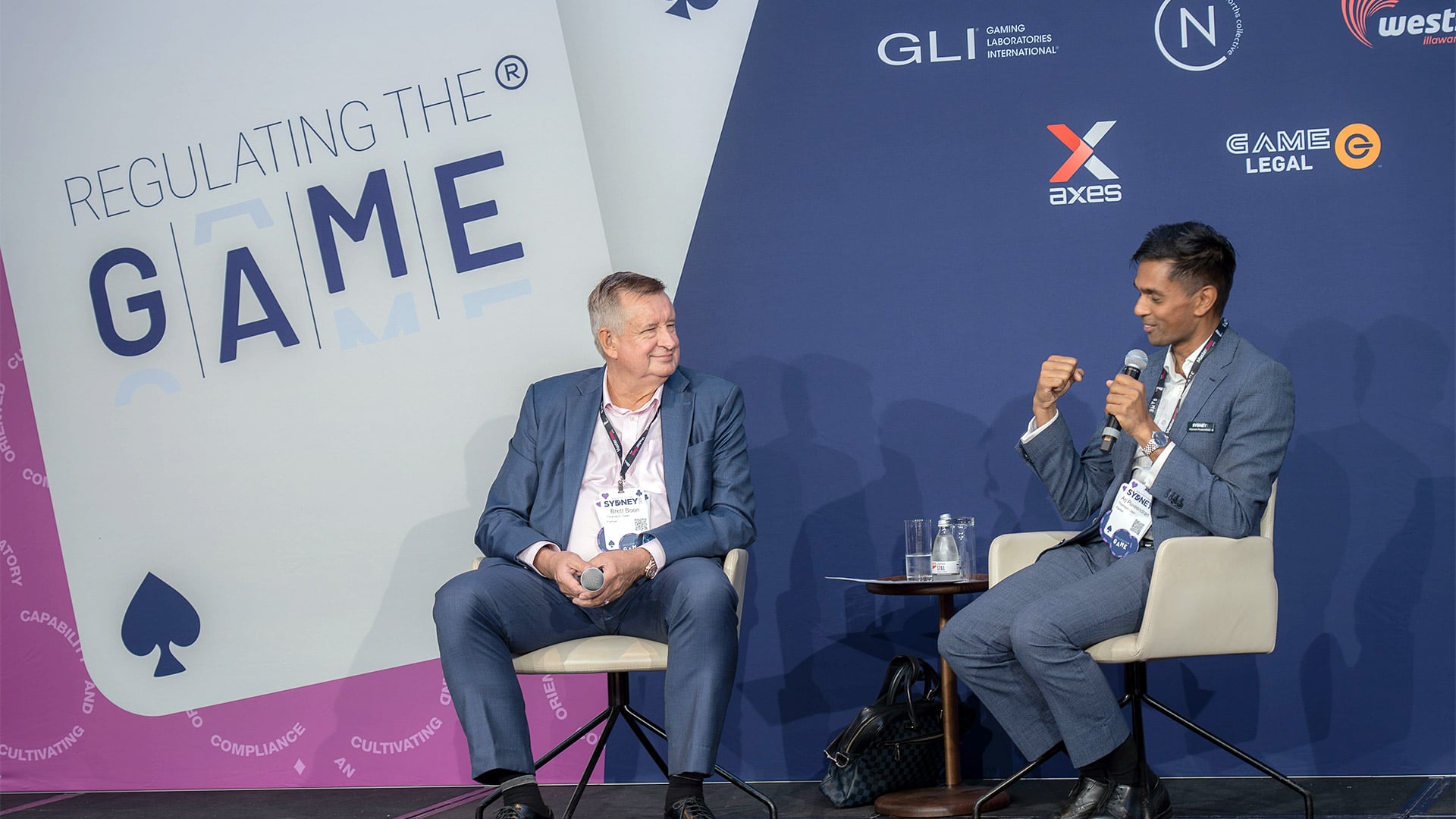
This year also marks the inaugural Global Awards Dinner. What does the introduction of the awards represent for the sector?
The Global Awards are about elevating the voices and leadership that are actively strengthening the sector’s future, recognising stewardship that improves how regulated markets perform, how credible they are to the community and how sustainably they can operate.
They are not simply recognition for recognition’s sake. The awards are intended to spotlight individuals and organisations that consistently champion compliance excellence as a core capability rather than a box-ticking function.
They also recognise safer gambling as an operational priority backed by governance, data and intervention discipline, as well as AML/CTF uplift through practical and effective controls supported by a culture of integrity.
Innovation is another key focus, particularly initiatives that are outcome-driven: tools and approaches that measurably strengthen delivery rather than simply signalling modernity.
In that sense, the awards help shape and reinforce what great looks like: leadership prepared to take responsibility for hard outcomes, invest in capability and set expectations for the next phase of regulated market maturity, where performance and public confidence rise together.
Looking ahead, the plan is to expand the awards in 2027 with tighter, impact-led categories. These may include sport and racing integrity initiatives that can evidence outcomes, advisory and professional services work that delivers measurable capability uplift in areas such as AML/CTF, governance and safer gambling, as well as harm-prevention and education programmes that demonstrate real-world impact.
As final registrations close, what do you hope delegates take away from the three days of discussion and debate?
What I hope delegates take away is a coherent bundle of practical insights, not just from individual presentations but from the cumulative arc of the three days: how themes connect, where perspectives genuinely diverge and what that implies for real-world decisions when people return to their organisations.
Substantively, I want delegates to leave with sharper judgement on the central tension we are all managing: how to pursue robust regulation and strong consumer and integrity outcomes without defaulting to a blunt, overextended approach that inadvertently pushes demand and behaviour into black, grey or otherwise unregulated channels.
The point is not to soften standards. It is to improve calibration, feasibility and effectiveness so regulated markets retain legitimacy and market share while lifting outcomes.
I also want the conference to stimulate ongoing dialogue on leadership and stewardship, with more credible voices stepping forward to shape the sector’s direction on ethical leadership, governance, culture and accountability.
Better outcomes are rarely produced by one stakeholder group alone. They come from sustained, informed engagement between regulators, industry, advisers, researchers and community stakeholders, grounded in evidence and operational reality.
Finally, I want delegates to leave with momentum, inspired by the inaugural awards as a signal that the sector is serious about recognising excellence. The aim is for the conference to become not just an annual event, but a platform that continues raising capability, expectations and ambition year after year.