








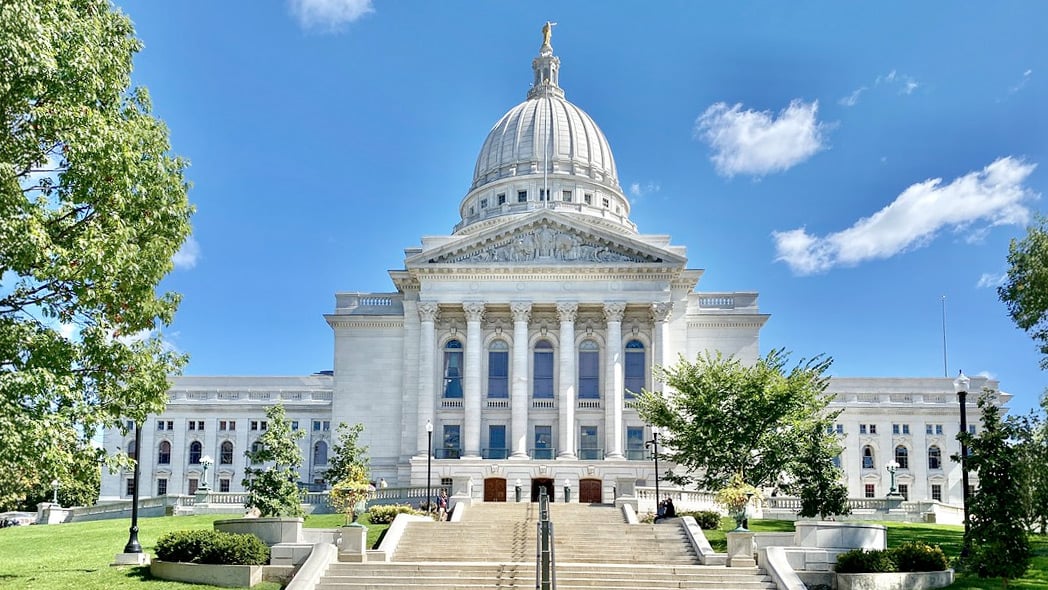
The Wisconsin Legislature is considering legislation that would allow 11 federally recognized tribes to launch online gambling within the state’s borders under a “hub-and-spoke” model.
The system is gaining attention as tribes and states seek ways to address the rapid expansion of online gambling platforms that currently operate under federal oversight, ICT News reported.
Victor Rocha, Conference Chair for the Indian Gaming Association and a citizen of the Pechanga Band of Indians, said certain online betting platforms exploit regulatory loopholes to bypass both state authority and tribal gaming compacts.
“Prediction markets are a loophole that’s been exploited by Wall Street and the tech bros to circumvent states’ rights and tribal rights,” Rocha said. “It’s been the industry’s dream for the longest time to look for a way for federal sports gambling or gambling in all 50 states.”
Platforms that offer prediction markets allow users to place wagers on real-world events such as elections. The platforms classify these as “event contracts,” placing them under federal regulation by the Commodity Futures Trading Commission rather than state gambling laws.
Because of that classification, the platforms can legally operate across all 50 states, even in places where traditional gambling is restricted. “It’s about taking advantage of the moment, and it’s a violation of states’ rights and tribal sovereignty,” Rocha said.
Several states, such as Nevada and Utah, have challenged these platforms, though much of the country has yet to establish regulatory responses.
Supporters said the hub-and-spoke system could offer a solution that keeps online gaming under tribal oversight. The model was first implemented in a 2021 gaming compact between the Seminole Tribe of Florida and the state of Florida.
Under the arrangement, servers hosting online gaming platforms are located on tribal land — the “hub.” Players can place bets through mobile devices — the “spokes” — as long as they are physically located within the state.
Wisconsin lawmakers are now considering a similar approach. On Feb. 19, the Wisconsin Assembly advanced Assembly Bill 601, which would allow the state’s 11 federally recognized tribes to implement their own hub-and-spoke system for online gambling.
“[This is] one of the best things you can do to curb illegal gaming, offshore gaming,” said Dominic Ortiz, CEO of the Potawatomi Casino in Milwaukee and a major proponent of the legislation. “We’re fighting predictions on a national level. The NGIC [National Indian Gaming Commission], IGA, everybody, is fighting against predictions and their ability to offer sports betting, [which is] in our eyes, in violation of state and tribal compacts and sovereignty.”
The Seminole-Florida model allows the tribe to expand gaming across their state, including mobile sports betting. Ortiz called the system “one of the most powerful moves in Indian Country to exercise sovereignty as a group.”
If Wisconsin passes the legislation, the state’s 11 tribes would gain exclusive rights to online gaming, controlling servers and ensuring the benefits remain within tribal communities.
“The SBA alliance, the Sports Betting Alliance, they’ve kind of controlled the narratives,” Ortiz said. “Well, now that we have a hub-and-spoke model, we can work within the state, and we can create an alliance amongst the tribes and unite our sovereignty.”
Tribal gaming has long been a critical source of revenue and employment in Wisconsin. The state’s 26 tribally owned casinos have generated hundreds of millions in taxes and provide tens of thousands of jobs. Locally, these funds support initiatives such as language revitalization, elder care, and natural resource protection.
The Potawatomi Casino, owned by the Forest County Potawatomi, was the first off-reservation casino in the United States, opening in 1991 to help lift tribal members out of poverty. More than 70% of the casino’s workforce are people of color, according to the casino’s website.
“With this industry, the benefits of gaming stay within the economy,” Ortiz said. “This isn’t outside corporations taking the money elsewhere.”
The Wisconsin Senate is expected to reconvene on March 17 to continue discussions on the bill.
Original article: https://www.yogonet.com/international/news/2026/03/13/118064-wisconsin-tribal-leaders-push-hubandspoke-model-to-regulate-online-gambling