








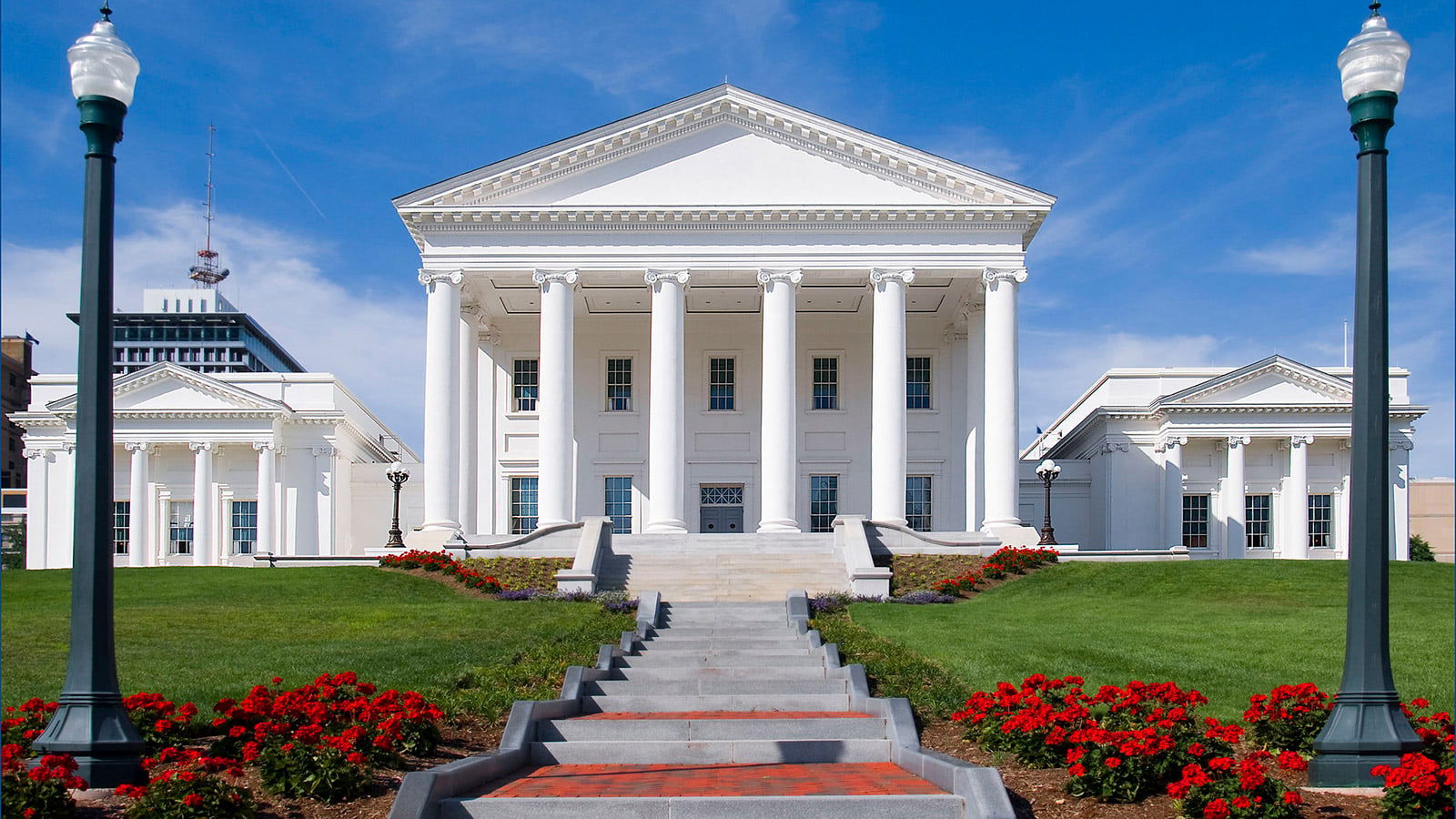
Efforts to launch an online casino market in Virginia have stalled despite both the Senate and House passing bills to approve the expansion. Plans to introduce the vertical have now been pushed back to at least 2028 after legislative negotiations collapsed ahead of the March 14 session deadline.
Lawmakers in the state Senate and House of Delegates ended the 2026 session without reconciling differences between House Bill 161 and Senate Bill 118. Both measures had passed their respective chambers but required a unified version before final approval.
Conferees from both chambers were unable to reach an agreement before the session adjourned on Saturday night. As a result, the legislative process must restart in 2027, requiring both chambers of the Virginia General Assembly to pass any approved measure again before implementation.
The final versions of both bills had already aligned on enactment language that required a second round of approval in 2027, setting the earliest possible launch date for online casino operations at 2028.
Agreement on structure, disagreement on revenue
The Senate approved SB 118 by a 19-17 vote in late February, while the House passed HB 161 by a 67-30 margin the following day. Both votes required reconsideration before final passage.
Each chamber amended the other’s proposal during the crossover process. Lawmakers later rejected those amendments, restoring each bill to near-original form before entering conference discussions.
Both proposals outlined a similar market structure. Virginia’s land-based casinos would have been allowed to partner with up to three online platforms each to offer iGaming statewide. Existing operators in the state include Caesars Entertainment, Rush Street Gaming, Hard Rock International, Boyd Gaming, and The Cordish Companies.
The bills proposed $2 million platform fees and $500,000 initial licensing fees. Operators would have been taxed at 20% of adjusted gross gaming revenue. A portion of tax proceeds was intended to address concerns tied to potential effects on land-based casinos. Oversight authority would have been assigned to the Virginia Lottery Board.
Negotiations stalled over how tax revenue would be allocated and the process governing that distribution.
The iGaming legislation included a condition tied to a separate proposal to establish a unified gambling regulatory body in Virginia.
Two versions of that effort were also under consideration. Senate Bill 609 did not advance out of conference before the session ended, while House Bill 271 was continued to 2027.
Opposition weighs in
The National Association Against iGaming, whose membership includes Cordish, Red Rock Resorts, Monarch Casino & Resort, and Churchill Downs Inc., opposed the legislation.
“Virginia lawmakers made the right decision today by rejecting the expansion of online casino gambling. Virginians made their voices heard and stopped a proposal that would have placed casino-style betting on every phone and smart device with 24/7 access,” said NAAiG spokesman Oliver Barie in a statement posted on social media.
“iGaming carries serious consequences, including increased risk of addiction and financial harm for families, while diverting money away from brick-and-mortar businesses and our local communities. We thank the legislators who chose to protect Virginia and rejected the expansion of this harmful policy,” Barie added.
The proposed legislation also included provisions to prohibit online sweepstakes casinos. With the bills not advancing, those platforms continue operating in a legal gray area while regulated online casino gaming remains prohibited in the state.
Other gaming measures advance
While online casino legislation did not move forward, several other gaming-related measures cleared the General Assembly before adjournment.
Lawmakers passed SB 756, which authorizes a land-based casino in Fairfax County, subject to voter approval. The legislature also approved a measure prohibiting the use of credit cards for sports betting.
In addition, lawmakers reached an agreement on legislation banning against-the-house daily fantasy sports and imposing a 10% tax on peer-to-peer DFS operators. The conference process also produced agreement on SB 661, which permits skill gaming machines to return to venues such as convenience stores, gas stations, restaurants, and bars.
The Fairfax County casino proposal, the DFS legislation, and the skill gaming measure now head to Gov. Abigail Spanberger for consideration.
Original article: https://www.yogonet.com/international/news/2026/03/17/118098-virginia-lawmakers-fail-to-unify-igaming-bills-delaying-market-launch-to-at-least-2028