








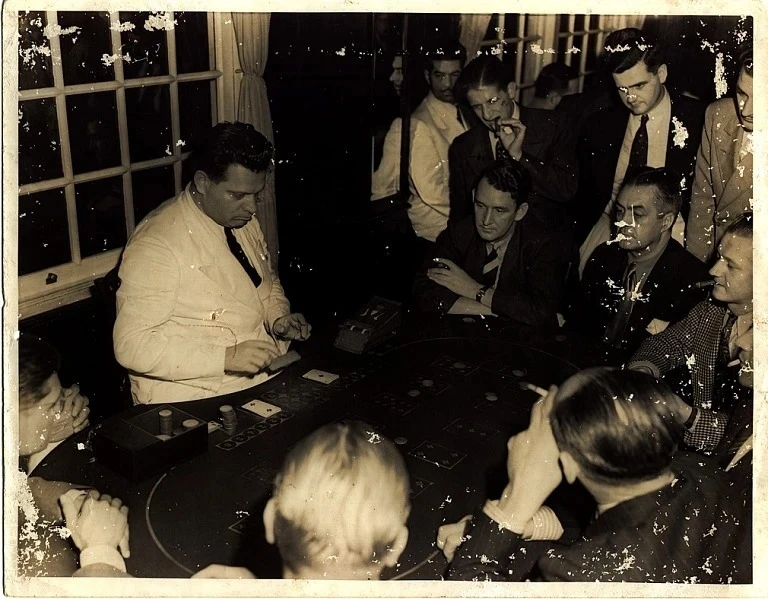
Eighty years ago, on 30 April 1946, President Eurico Gaspar Dutra dealt a harsh blow to Brazilian society by ordering the closure of casinos through a decree. Based on religious principles, the measure brought an end to an era of glamour. This drove the industry underground, and to this day, the ban prevents the country from collecting billions of Brazilian reais in taxes.
End of casinos in Brazil
Casinos in Brazil were closed by Decree-Law No. 9215, dated 30 April 1946, issued by President Eurico Gaspar Dutra. It is said that the president was influenced by his wife, Dona Carmela (known as Dona Santinha, which means Mrs. Holy), an extremely religious woman who was against gambling.
Dutra was also influenced by the then-Minister of Justice, Carlos Luz, who aspired to be governor of Minas Gerais and fought against casinos in the name of the “traditional Minas Gerais family.” He shut down the casinos… but lost the election!
It wasn’t just religious reasons that led Dutra to close the casinos. Political action prevailed, and he marked the end of an era in the fight against Getúlio Vargas. In addition to being a regular at casinos, it was said that he profited financially from the activity. Furthermore, casinos in Rio de Janeiro were allegedly owned by his brother Benjamim Vargas, who used a former muleteer, Joaquim Rolla, as his front man.
Reasons
The decree-law that shut down the casinos cited the following reasons for the presidential decision:
“Whereas repression of gambling is an imperative of universal consciousness;
“Whereas the criminal laws of all civilized nations contain provisions designed to achieve this end;
“Whereas the legal, moral, and religious traditions of the Brazilian people are opposed to the practice and operation of gambling.” On that fateful day for the industry, the president met with his ministers, secretaries of state, and the head of the Federal Department of Public Safety to discuss two sensitive issues: the closure of casinos and the fight against communism. He decided to shut down the casinos and put off the hunt for communists for later. Ironically, both went underground and suffered years on end. Fortunately, the communists have earned their place in the sun… but the casinos haven’t yet.
The impact of the casino closures was immediate, and most of the newspapers published that afternoon with headlines about the end of the casinos sold out quickly. The newspaper Resistência (Resistance) stands out. On 5 May, they released an article defending the thousands of jobs at stake: “A Severe Blow to the Country’s Artistic Future!”: “In line with its guidelines, Resistência has launched a campaign to support the demands of all those who, as a result of the decree-law that abolished gambling, found themselves facing unexpected disruption to their work.” (…)”.
As can be seen, even in the 1940s, the sector’s role in job creation was substantial, and social concern for the unemployed was reflected in the press, albeit in a very tentative manner, since Brazil—having only recently emerged from Getúlio Vargas’s Estado Novo dictatorship—had not yet achieved freedom of the press, and some of the most important newspapers of the time supported the Dutra administration. Eighty years later, the employment crisis persists in the country, and Brazil is still missing out on the hundreds of thousands of jobs that the gaming industry could create.
Black 31
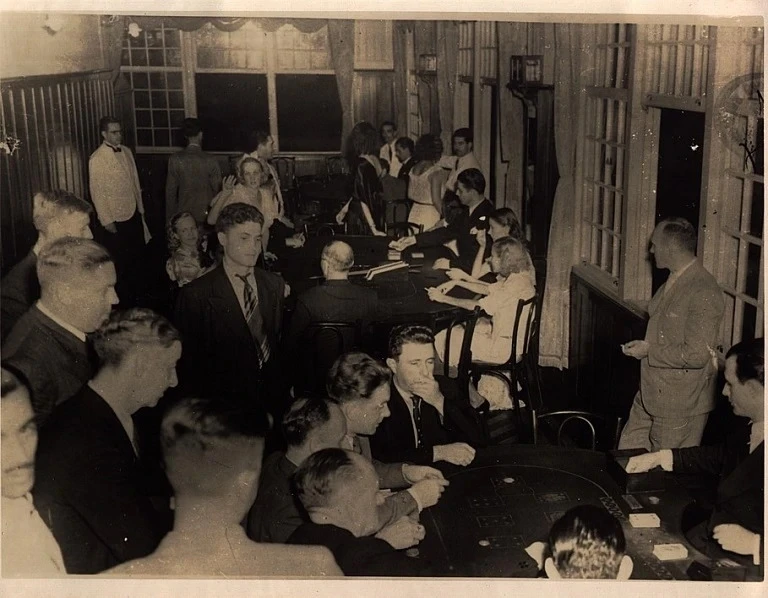
“Ladies and gentlemen, place your bets for the final spin of the roulette wheel in Brazil!”… In a solemn tone, struggling to hold back the tears welling up in his eyes, José Caribé da Rocha, director of the Copacabana Palace Casino in Rio de Janeiro, announced at 11pm on April 30, 1946, the final game of roulette in Brazilian casinos, ending an era of glamour, stories and luxury. After the announcement, his suppressed tears welled up, his face reflecting the same emotion felt by thousands of patrons and more than 40,000 workers at the roughly 70 casinos that existed in Brazil at the time. A few minutes later, BLACK 31…
Overnight
Casinos first appeared in Brazil during the Empire, but were forced underground in 1917, during the Republic Period. In 1934, President Getúlio Vargas legalised gambling in Brazil and was even a regular at many casinos across the country.
When they reemerged in 1934 and throughout the 12 years they were in operation, they spread across several states. It was during this period that spectacular shows—in addition to the games themselves—took centre stage at the major casinos, featuring many artists from Brazil and abroad.
But shutting down an activity that had previously been authorised by the government and the way it was done was not merely disrespectful, it was extremely heavy-handed. Instead of setting a deadline for the closure of casinos, the decree-law took effect on the date of its publication, catching business owners, employees, and performers who had performance contracts with the casinos off guard.
One could even call it a betrayal by the government, since during the election campaign, Dutra’s opponent, Brigadier Eduardo Gomes, had strongly advocated for the closure of casinos. Because of this stance, several business leaders in the sector endorsed Dutra’s candidacy. He took office in January, and three months later, he dealt the final blow to the operation. Another example of the impact that such a measure caused was the Lambari Casino in Minas Gerais, inaugurated one day before the activity ban. Did anyone compensate investors?
Success and luxury
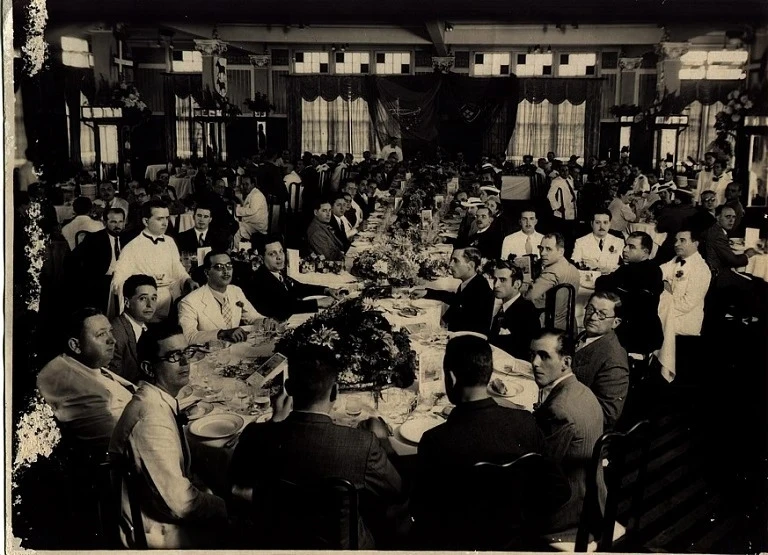
During the golden age of gambling in Brazil, the most charming, luxurious, and incredible casino was the one at the Copacabana Palace, where the cream of Brazilian society gathered to gamble, dance, dine and enjoy fantastic shows (including international acts). Added to this was the equally sensational and popular Cassino Atlântico, located at the end of Avenida Atlântica in Copacabana, which hosted major national and international concerts.
But when it comes to casinos in Brazil, the first name that comes to mind is Cassino da Urca, renowned for its beauty, luxury, and glamour—a venue that launched the careers of many of the country’s famous artists. It was owned by Joaquim Rolla, a near-illiterate muleteer from the state of Minas Gerais, who also built another casino that went down in history among lovers of gambling in magnificent venues: the Hotel Quitandinha, in Petrópolis. It was said that he was merely a front man for Getúlio’s brother, Benjamim Vargas.
São Paulo also had glamorous casinos, most notably the Parque Balneário Hotel in Santos, a symbol of sophistication and the São Paulo jet set. There was also the casino at the Ilha Porchat Club, the Casino Monte Serrat (which welcomed bankers, judges, prominent figures from Brazilian high society of the time, and many influential politicians, such as former São Paulo Governor Júlio Prestes), Miramar, and Atlântico. Those were all located in Santos; whilst the Grande Hotel was in Guarujá. In the interior of São Paulo, there were other beautiful cassinos in Serra Negra, Campos do Jordão, and Águas de São Pedro.
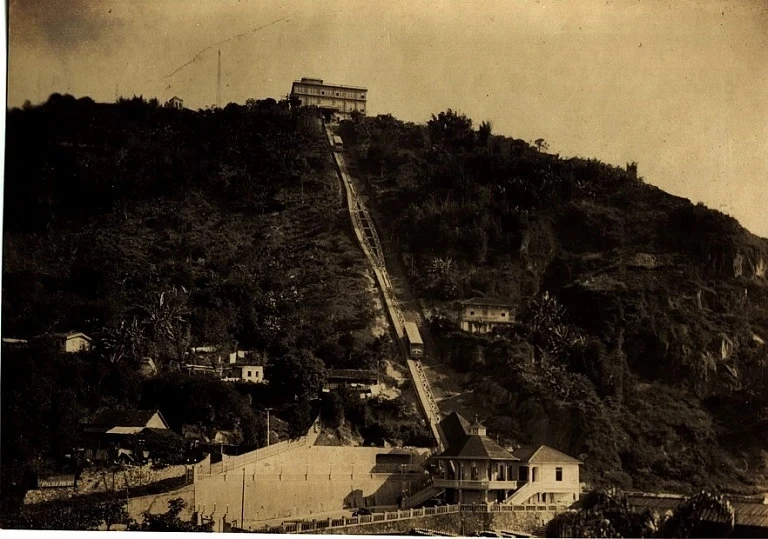
The Grande Hotel de Araxá, a landmark in the state, was opened in 1941 in Minas Gerais by Benedito Valadares and Israel Pinheiro. In addition, the Cassino da Pampulha in Belo Horizonte, the famous Quisisana e Palace in Poços de Caldas, and the Cassino Brasil in São Lourenço (which had no fewer than eight casinos and 40 hotels in its vicinity), the most luxurious in the country and a stage for renowned artists of the time, such as Luís Gonzaga (the King of Baião, a local musical genre) and Francisco Alves (the King of Voice).
On Boa Viagem Beach in Recife stood the Cassino Americano, which had been set up to cater to US soldiers stationed in Brazil during World War II. In the 1990s, a bingo hall operated at that same location during the period when bingo betting was allowed in the country.
All the glamour, luxury and thousands of jobs were thrown away by Decree-Law 9,215. The golden age of casinos had come to an end, and with it, great opportunities to discover new talent, tens of thousands of jobs, investments in casino complexes, and a leisure option for foreign tourists and Brazilians who enjoyed gambling. Not to mention the taxes that were levied on the activity. By shutting it down, President Dutra did not eliminate casinos; he drove them underground and, in so doing, linked them to a disastrous association: corruption.
Bingo betting
To alleviate the lack of entertainment and gaming options, the Zico Law was enacted in 1994, regulating bingo halls, which operated until 2007. In total, Brazil had nearly a thousand bingo halls, evolving through three phases: the first featuring only card-based games, the second incorporating computers for betting on multiple sets of cards, and the third marked by the introduction of video bingo machines.
Sports betting and online gambling
In 2018, toward the end of Michel Temer’s administration, Brazil legalised sports betting—which was already well-established in the country—and set a two-year deadline, extendable for another two years, for the regulations to be finalised.
It didn’t happen until late 2023, when online casino gambling was also allowed. The regulated operation did not begin until early 2025, following a process of drafting regulations and ensuring operators complied.
Today, the industry is well established, and Brazil has levied nearly BRL10 billion ($2 billion) in taxes in 2025. Nevertheless, it continues to face opposition from evangelicals and a more conservative segment of the population.
In addition, it has been a vote-getting ploy by President Lula, who is seeking reelection and has singled out betting shops as the target of his criticism to win over evangelical voters.
Jobs: briefly comparing then and now
If we were to compare this to the population at the time casinos were shut down, we would have an interesting insight into the potential legalisation of the industry in Brazil. According to data from the 1940 census, Brazil had a population of 41,236,315, and the shutdown of the industry left 40,000 workers unemployed. Now, there are over 220 million Brazilians, five times more inhabitants. If we were to apply proportionality, we would have 200,000 jobs in the casino industry today.
But this simplistic view doesn’t hold up, because the 1940s were completely different from today. Back then, leisure was a luxury reserved for the few; the heavy workload didn’t allow people to spend much time in casinos, and few women frequented such places.
Today, thanks to technology, people have much more free time; women have the same rights as men; transportation is much more convenient; Brazil has become much more deeply integrated into the global business world; and tourism has increased substantially. Currently, to meet the demand for casinos, far more jobs than just 200,000 would be needed.
Tourism
The growth of tourism is a reality once more leisure options are offered for visitors to Brazil, and casinos are no exception. Some statistics show just how much the country falls short in this regard. According to data from the Ministry of Tourism, Brazil welcomed approximately 9.3 million foreign tourists in 2025. During the same period, Las Vegas—the gambling capital of the world, located in Nevada, United States—alone welcomed 38.5 million visitors.
Taxes
According to Senator Angelo Coronel, the legalisation of all forms of gambling in Brazil (resort casinos, urban casinos, bingo, and animal-based lotteries) could inject at least BRL70 billion into the economy and create 700,000 direct jobs.
The same figures are cited by Senator Irajá, the sponsor for Bill 2234, which has been approved by the Chamber of Deputies and the Senate Committee on the Constitution and Justice. The bill is just waiting for the right moment to be brought before the full chamber.
Operators are hoping for a comprehensive law that would allow not only casinos in integrated resorts—as some political figures are calling for—but also urban casinos, bingo halls, online casinos, gaming parlors, and other sectors.
It is therefore high time for Brazil to regulate all sectors of the gaming industry, create hundreds of thousands of jobs, attract tourists, and generate billions of reais in tax revenue. You bet—it’s a wise choice.
Gildo Mazza, Brazil Editor at iGaming Business and a journalist who has specialised in the gaming industry for 30 years. This article was first published on iGB Brasil.
Original article: https://igamingbusiness.com/casino/ban-legal-casinos-brazil-80th-anniversary/