








The promise of esports within sportsbook portfolios has long been clear. A digitally native audience, always-on competition cycles and a natural fit with live, data-led wagering should make it a high-performing vertical.
Yet for many operators, reality continues to fall short. Despite offering esports betting across major titles, engagement and revenue sometimes underdeliver versus expectations.
The challenges are indicative of a maturing market, whose growth is outlined in a recent report published by esports betting provider Oddin.gg. That study revealed that five of esports’ biggest titles – including Counter-Strike 2 (CS2) and Dota 2 – recorded between 18% and 62% year-on-year betting volume growth during 2025.
However, with a maturing market comes a shift in expectations. According to Oddin.gg, the average esports bettor is just 23 years old. Audiences raised on Twitch, in-game data overlays and real-time interaction have come to expect immediacy, depth and control. A static, feed-led sportsbook experience struggles to match that pace.
In most cases, the issue isn’t demand for esports. It’s how that demand is supported once the bettor is already inside the sportsbook experience.
What was once seen as a complementary product is increasingly expected to deliver meaningful revenue, exposing the gap between simply offering esports betting and delivering a product that performs. For some major operators, esports betting now ranks among the top five products by handle.
Attracting consistent engagement
Despite such growth, many operators are still struggling to convert that activity into consistent engagement. While most already have the matches, markets and odds in place, friction in the user journey remains common.
Bettors drop out mid-session when they cannot fully read the action, translate that understanding into a bet, or have nothing to engage with between fixtures. These pain points – in the stream view, the bet slip and the gaps between matches – may appear small in isolation, but together they fragment the journey and limit the potential of esports betting.
According to Marek Suchar, group head of strategic transition and growth at Oddin.gg, the sector’s biggest failure is not in attracting customers, but in what those bettors experience once they are already active.
“The coverage isn’t the problem,” Suchar says. “Most of these operators have the feed, they have the markets and the matches are live on the platform. The drop happens after the bettor is already there.”
When the stream falls short
According to Suchar, the first breakdown in esports betting emerges during live play. Esports is fast, complex and highly contextual, and without a clear understanding of what is happening, bettors become more cautious.
Standard sportsbook interfaces rarely provide enough depth to follow the action with confidence, particularly in titles such as CS2 or Dota 2. As a result, bettors frequently leave the platform to seek additional context, breaking the flow of the session.
Suchar adds: “Esports moves fast, and if a bettor isn’t confident about what they’re watching, they hesitate. In live betting, hesitation means the moment is gone.”
Solving this requires bringing both context and clarity into the same environment. Rather than forcing bettors to open additional tabs or external platforms, the sportsbook needs to become the place where understanding happens. This is where integrated solutions such as Oddin.gg’s Esports Widgets and BetPeek come into play.
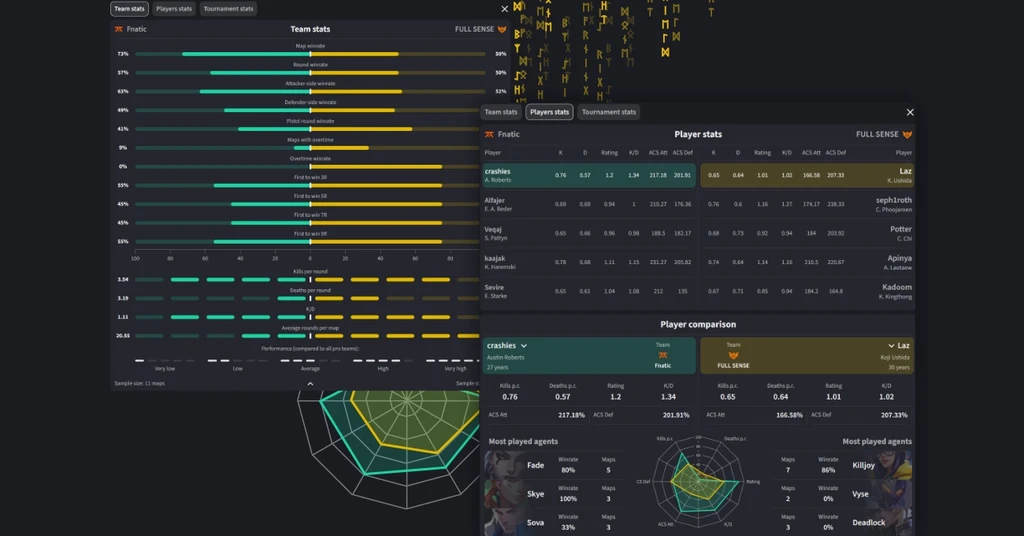
The Esports Widgets address the data side of the problem, embedding real-time statistics, team and player history, and live match analytics directly within the betting interface. BetPeek complements this by giving bettors direct control over how they follow the action, including player POVs, map movement, and key in-game context that would otherwise sit outside the sportsbook.
Suchar explains: “Used together, these solutions cover the two reasons bettors usually leave the platform mid-match. And the behavioural change is the point. When bettors feel confident about what they’re watching and what the data is telling them, they bet more often and they bet sooner.”
The limits of the bet slip
The second friction point lies within the bet slip itself.
Esports bettors, particularly experienced ones, tend to form detailed views on how a match will unfold. They want to reflect that understanding in their bets, rather than placing simple, isolated wagers.
However, traditional bet slips – developed for real-world football, tennis or cricket – are often not designed to support this level of nuance, limiting how selections can be combined within a single match.
“Most experienced esports bettors don’t want to place a simple bet,” Suchar says. “They’ve watched enough CS2 or Dota 2 to have a specific view of how a match is going to go, and they want to bet that view, not a simplified version of it.”
When that flexibility is missing, bettors are forced to compromise or disengage entirely. Over time, this reduces both bet frequency and overall value within esports betting.
Addressing this requires tools built specifically for esports logic rather than adapted from traditional sports. A solution such as Oddin.gg’s BetBuilder allows bettors to combine multiple selections within a single match in ways that reflect how games actually unfold. Crucially, it accounts for the unique correlations and structures of esports titles, enabling bettors to construct wagers that align with their reading of the game.
By enabling more expressive bet construction, the bet slip becomes a facilitator rather than a constraint – helping convert insight into action and increasing both engagement and bet frequency.
“The point isn’t just to offer more markets,” Suchar says. “It’s to make sure the bet a bettor wants to place is actually one they can place.”
The hidden cost of downtime
The third issue, for Suchar, emerges between matches and is often the most underestimated. While esports appears continuous, individual titles operate within structured calendars, with natural gaps between tournaments, regions and tiers. When a match ends, bettors who were actively engaged can suddenly find themselves with nothing to do.
As Suchar explains: “Tournaments have gaps in the schedule, regional prime times don’t line up, and bettors who were active 10 minutes ago suddenly have nothing to do. That’s usually where the session ends.”
Products such as Oddin.gg’s eSimulators and Penalty Arena are designed to fill these gaps by providing continuous, fast-cycle content that keeps bettors engaged. eSims extend core esports titles such as CS2 and Dota 2 into always-available formats, while also offering crossover opportunities through sports-themed simulations like eFootball and eBasketball. Penalty Arena adds a different dynamic, delivering rapid, repeatable betting moments tied to familiar football scenarios.
Together, these products help maintain momentum between live events, ensuring that esports betting sessions extend beyond a single match and continue until the next point of interest.
“The quiet windows are where operators are losing the most activity today,” Suchar says. “Fixing the in-match experience makes each match more valuable, but fixing the downtime is what keeps bettors on the platform long enough for the next match to matter.”
From presence to performance
Taken together, these three friction points highlight a broader truth about esports betting. Offering the product is no longer enough. Performance depends on how well the experience holds together across an entire session.
From understanding the action, to expressing insight through bets, to staying engaged between matches, each layer plays a role in converting interest into activity. When those layers align, esports betting can deliver on its long-promised potential.
Combining the Oddin.gg solutions to overcome these common pain points could be crucial for those operators looking to attract and retain esports customers.
“Using these tools together is optimal because they cover different parts of the same session,” Suchar says. “When they’re used together, the session holds together from start to finish instead of breaking every time the bettor has to wait, go looking for information, or settle for a bet that doesn’t reflect what they actually wanted to place.”
As operators look to strengthen their esports offering, the focus is shifting from availability to optimisation. The opportunity now lies in closing the gaps that interrupt engagement – and in doing so, turning a widely adopted vertical into one that consistently performs.

Marek Suchar, group head of strategic transition and growth, Oddin.gg
Original article: https://igamingbusiness.com/esports/esports-betting/why-esports-betting-still-underperforms-and-how-operators-can-close-the-gap/