








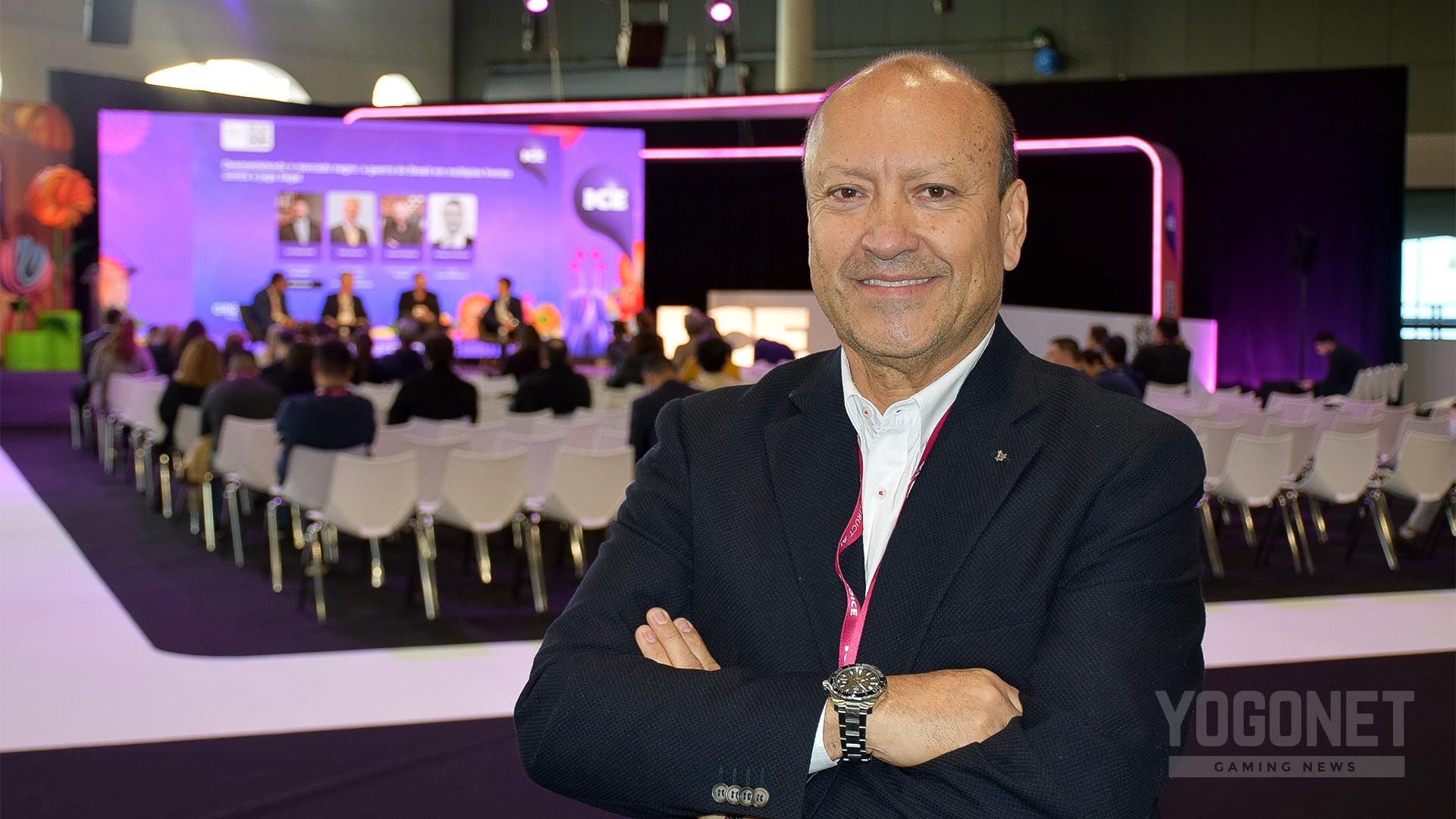
Within the framework of ICE Barcelona 2026, held earlier this month in Spain, Yogonet conducted an exclusive interview with Evert Montero Cárdenas, President of FECOLJUEGOS, the trade association that brings together a large portion of Colombia’s land-based and online betting operators.
The executive, who also participated as a speaker in one of the conferences on ICE’s official agenda, analysed the start of the year for the Colombian industry, recent regulatory developments, dialogue with authorities, and the balance between land-based and online gaming in one of Latin America’s most consolidated markets.
How does the year begin for Colombia’s betting industry, considering the challenges faced in recent times? And where do you believe the Colombian market could head in 2026?
We have high expectations, not only because of political factors, which undoubtedly have a strong influence on all industries and on the country’s economy, but also due to the changes that are taking place — and that have already taken place at some point — in tax matters for the games of chance sector, particularly online gaming.
We believe there has been significant progress in this regard, and we do not see it as the finish line, but rather as a starting point. We are talking about having achieved the change from a 19% VAT on player deposits to a 19% tax on GGR. In our view, this is a major step forward and, as I mentioned before, a starting point to continue reviewing and seeking the sustainability indicators that the sector needs.
As for the challenge of growth, I believe that today the goal is not simply to grow, but to know how to grow and to be able to grow without self-destruction. That is where the real challenge lies. And for this growth to be intelligent and sustainable, the issue is not paying taxes, but having well-designed taxes that are aligned with the reality of the business and our activity.
Do you feel that authorities and the political sector are listening to industry operators today? Or is there still a lack of understanding of the market when it comes to making the best decisions?
I think both situations exist. There has been an opening on the part of the political and regulatory sectors, in the sense that the Ministry of Finance understood, for example, the request to change the tax on deposits, which was very harmful to our activity. There was also a better understanding of how land-based operations work, and we are precisely in that process now, working to ensure greater listening and deeper understanding.
This activity is so complex that, many times, it is not a matter of bad intentions to damage the industry, but rather a lack of understanding of highly technical issues and, above all, decisions that affect the industry and are transversal to the entire economy. Decisions such as wage increases, night-shift surcharges, and weekend premiums, combined with decisions that specifically affect the industry, make it difficult for a thriving industry to remain viable.
FECOLJUEGOS represents both land-based gaming and the online betting market. Colombia has clearly consolidated itself in the latter segment, with several years of regulated online gaming. How do these two segments blend in a consolidated market? Is a balance ultimately achieved?
Since online gaming regulation was introduced in Colombia about six or seven years ago, there was concern that it could cannibalise land-based gaming, and we have seen that this has not been the case.
I believe there has been a very good complementarity between both segments, since many players enjoy the same virtual betting products that exist in land-based gaming, which helps maintain interest in the casino experience. As I mentioned, both worlds have complemented each other, and as long as we manage to maintain that balance, we are on the right path.
Of course, it is clear that the online sector has experienced greater growth, driven by the widespread adoption of smartphones, technological development, and its reach among younger age groups. Younger audiences tend to engage much more with, for example, sports betting than older generations.
In this way, land-based and online operations have complemented each other, and we hope that market growth will be rational — not suffocating, but rather creating the conditions for this activity to continue developing across the region.
Original article: https://www.yogonet.com/international/news/2026/02/02/117380-evert-montero-cardenas-the-shift-from-vat-to-ggr-was-a-starting-point-for-the-sectors-sustainability