








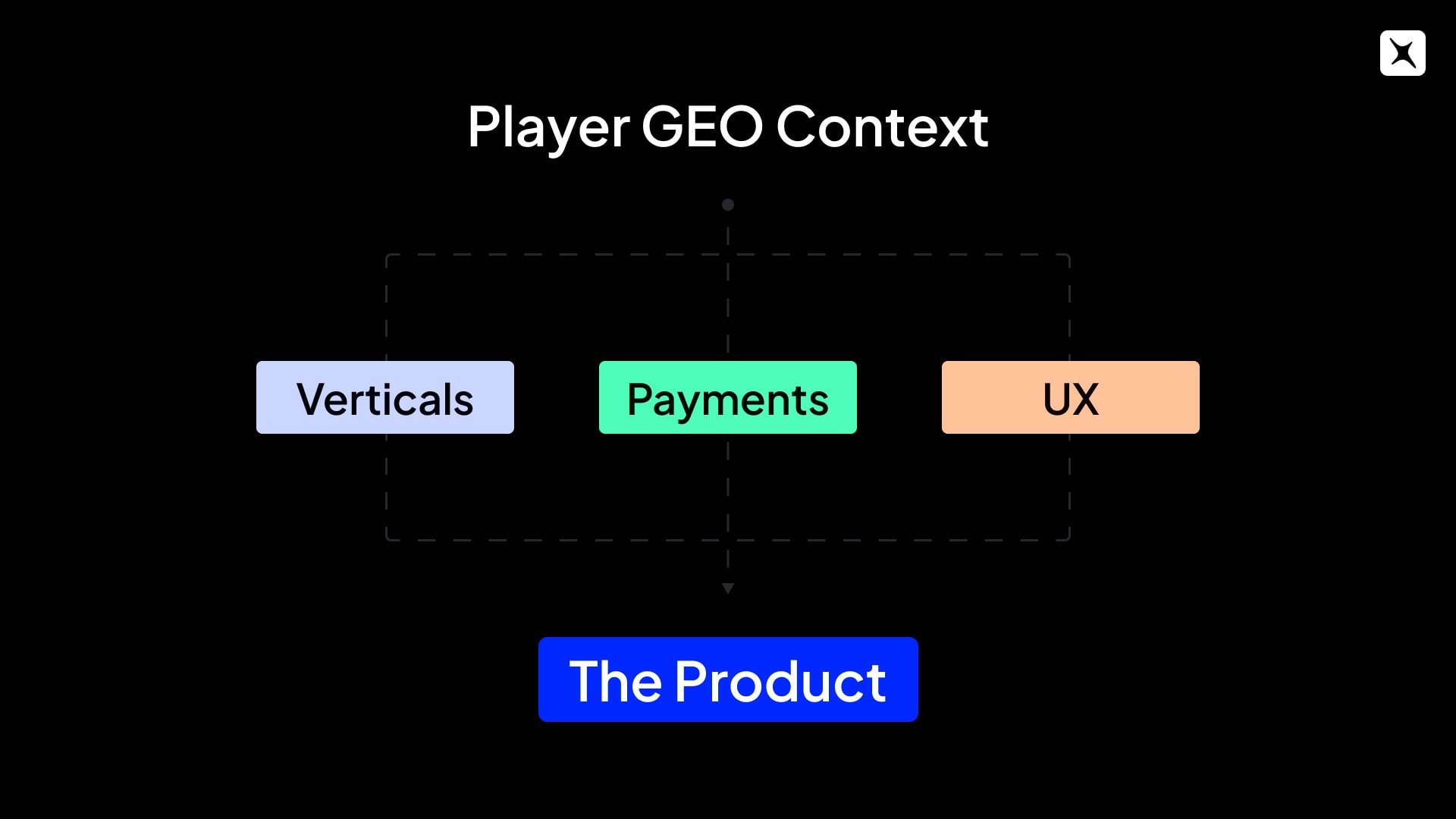
In this article, gaming platform provider Turbo Stars explores how effective localization goes beyond surface-level adjustments to address product-market fit across vertical mix, payments infrastructure, and user experience.
A platform launches in a new market: the interface is translated, the currency is local, and the welcome bonus is live. On paper, the product is localized — but the numbers don’t move.
As a technology partner working with operators across regulated and emerging markets, Turbo Stars sees this pattern regularly: what looks like a traffic or retention problem is often a product-market mismatch. The issue is usually not visibility alone, but something deeper — the wrong vertical mix, payment friction at deposit, or UX built for a different audience.
Localization, done properly, isn’t a content layer. It’s an understanding of what a specific market actually responds to — and building the product around that, not around a generic template with translated copy.
Casino vs. Sportsbook
The vertical split between sportsbook and casino isn’t a minor preference difference — in some regions, it determines whether a product gains traction at all. Turbo Stars approaches market entry through player behavior first: what users in that geography actually come for and what keeps them active.
In Latin America, football isn’t just a sport — it’s a cultural constant, and the demand for sportsbook products follows directly from that. Betting on local leagues, Copa Libertadores fixtures, and national team qualifiers is part of how a significant portion of the audience engages with sports. An operator entering Brazil or Mexico without strong sportsbook coverage isn’t offering an incomplete product — they’re offering the wrong one.
Southeast Asia runs on entirely different logic. Baccarat carries cultural weight across several markets in the region in a way that has no real equivalent elsewhere. Skill-based formats — fishing games, hunting games — drive meaningful engagement across SEA in a category that simply doesn’t exist at scale in Western markets.
Player preferences at the regional level often have roots that go deeper than demographics — into how a culture relates to sport, competition, and entertainment itself.
Payments
A brand can perfectly understand the entertainment preferences of a market and still underperform if the payment infrastructure doesn’t match how players there actually move money.
In Kenya, over 80% of sports bets are placed through M-Pesa. An operator without M-Pesa integration isn’t offering a suboptimal experience — they’re effectively invisible to a large portion of the market. Brazil tells a similar story: PIX accounted for 76.4% of all payment transactions in 2024, surpassing cards. An operator relying on card-based deposits is working against the grain of how the market moved.
The pattern repeats across Latin America — Oxxo, PSE, Efecty — cash-based methods serving populations where traditional banking access isn’t universal. In markets where even these don’t dominate — parts of Africa, the Middle East, emerging LatAm — crypto has quietly filled the gap. Not because players are tech-forward, but because volatile currencies and processors that routinely decline gambling transactions make it a practical default.
Turbo Stars bakes payment flexibility into the core — operators deploy M-Pesa, PIX, or crypto without requiring a separate build for each market. When a new geography opens, the payment layer adapts. The operator doesn’t rebuild.
UX
A player can find the right product, in the right vertical, with the right payment method — and still not convert. Turbo Stars connects this to operational design, and UX issues.
In mobile-first markets, heavy interfaces and broadband-first assumptions create friction before deposit even starts. In Kenya, 89% of bettors access platforms exclusively through a smartphone. In markets like Nigeria, where mobile speeds average under 20 Mbps, a platform optimised for Western broadband creates issues that players don’t articulate. They just leave.
Bonus structures follow the same rule. A welcome offer designed around one market’s player behavior does not automatically translate into another. In Southeast Asia, for example, live dealer formats with local-language familiarity can outperform more generic experiences because the product feels more natural to the audience.
Registration flow, KYC steps, first-deposit logic, and the number of actions between landing and play all need to reflect local tolerance for discomfort. What feels standard in one region can feel unnecessarily slow in another.
None of this requires building a separate product for every market. It requires a platform flexible enough to adapt, and clarity on which variables in each context.
Context is the product
The operators who get this right aren’t necessarily the ones with the biggest budgets or the most languages supported. They’re the ones who treat the player’s context — how they move money, what they want to bet on, what device they’re using, what feels familiar — as the actual product brief.
A platform that can adapt to those variables quickly is the key difference between gaining traction and burning acquisition budget on a product that almost fits. This is what Turbo Stars represents as a B2B iGaming platform and sportsbook provider — fast deployment, flexible architecture, and geo-specific localization across regulated and emerging markets.
Original article: https://www.yogonet.com/international/news/2026/04/08/118452-localization-as-a-product-strategy-what-to-look-at