








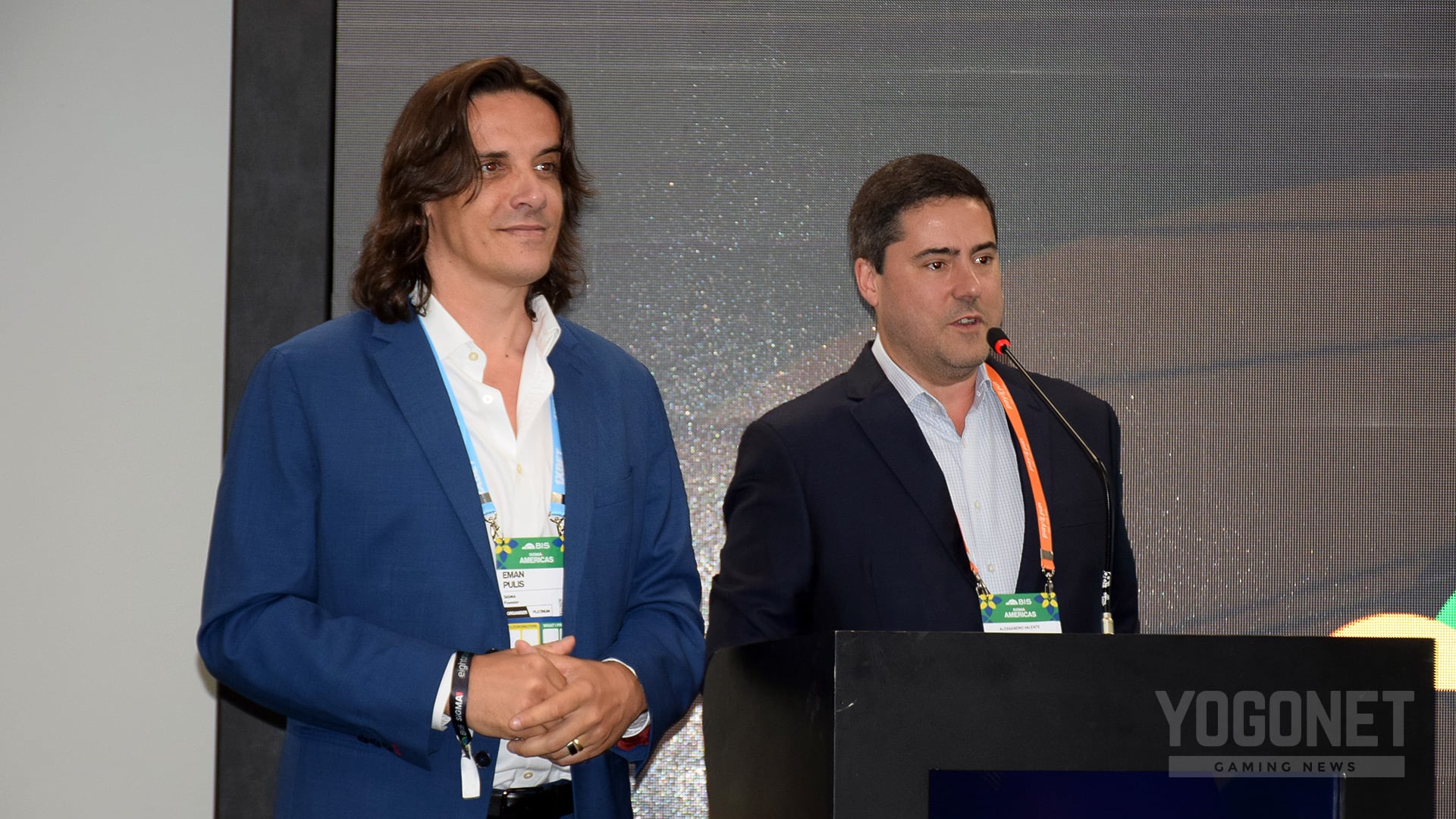
On the second day of BiS SiGMA South America, in São Paulo (SP), Yogonet spoke with Alessandro Valente, co-founder of the event. In the interview, he highlighted the role of the gathering as a bridge between the industry and the government, reinforcing the importance of dialogue for the development of the sector in Brazil.
During the conversation, Valente revealed plans to produce a documentary about the history of gambling and to hold a new event in Brazil’s Northeast. The executive also shared his views on how prediction markets should be regulated, a topic that has been gaining traction in industry discussions.
How do you evaluate the first day of BiS SiGMA South America and the progress of the second? Did it meet expectations in terms of attendance and exhibitor presence?
We had one of the best platforms here for a healthy dialogue between the industry and the government. This dialogue can generate a positive outcome for society, which is the return delivered by the industry in a clear and objective way—not only through taxes, but also through increased sponsorships for cultural events, the arts, and especially sports. An event like this ends up having a direct impact on society.
Brazil has not yet approved the bill legalizing land-based casinos. If that approval comes, will the event scale up, or will the focus remain on online gaming?
If this happens in the coming months, we will have much greater demand for space. However, it is a global trend for digital to increasingly dominate the scene. This doesn’t mean that land-based gaming will cease to exist, but it does end up losing some ground to digital.
I believe there will be a balance, perhaps with a larger share for the digital market in terms of the number of companies and businesses. On the other hand, land-based gaming requires larger physical spaces, meaning we would need the entire Transamerica [event venue] to accommodate this industry.
We are in an election year, and the sector faces criticism from both the right and the left. Do you think betting will become a topic in electoral debates? Should the sector prepare for a new wave of criticism?
Today [April 8], we heard a statement from President Lula about the intention to end betting in Brazil. He does not have statistical backing or accurate information, and unfortunately, he made that statement.
This is very dangerous. If gambling ceases to be legal, or if rules are created that prevent the industry from flourishing, it will continue to exist, but in the shadows, which is bad for the sector and even worse for society.
On illegal sites, there is no control, no moderation, and there are bets placed by minors and beneficiaries of social programs. That is where digital fraud takes place. What the government needs to do is fight illegal gambling and underground operations, because that is where the real problems lie.
Last year, more than 25,000 sites were blocked. These illegal operations are based abroad, so the money either leaves the country or is converted into cryptocurrencies, which makes seizure impossible.
Illegal gambling must be tackled on all fronts. Of course, blocking websites should continue, but we also need actions targeting the flow of funds, with the support of institutions such as Coaf and the Central Bank, and penalties for banks that are complicit with organized crime.
What is your view on prediction markets? Should they be regulated as gambling or by the Securities and Exchange Commission (CVM)?
I still need to study this market further, but my understanding is that it operates in a hybrid format.
If I were responsible for the legislation, I would create a hybrid model, where, for example, the CVM and the Secretariat of Prizes and Betting (SPA) oversee this market together, just as we already have the SPA and the Ministry of Sport jointly responsible for sports betting.
I see prediction markets as a separate segment, since they include many types of events beyond sports, which fall outside the current scope of the Ministry of Sport. I would implement a joint approach between the CVM and the SPA.
In 2025, you held BiS Brasília. Will there be another edition this year?
We are convinced that BiS Brasília was very successful, and we want to repeat it this year.
And more than that: we also want an edition in the Northeast. We are just deciding which capital. Most likely, it will be João Pessoa (PB).
Would you like to add anything that wasn’t asked?
Yes. Thanks to outlets like Yogonet, we are able to bring knowledge beyond the gates of the event. The event reaches those who are physically here. Without companies like yours, how would the information reach the outside world, especially neighboring countries? So I want to thank you and say that your role is extremely important.
Additionally, as a bit of a teaser: we are planning to produce a feature-length documentary this year telling the story of gambling from its origins to the present day, with a focus on the Brazilian and Latin American markets.