








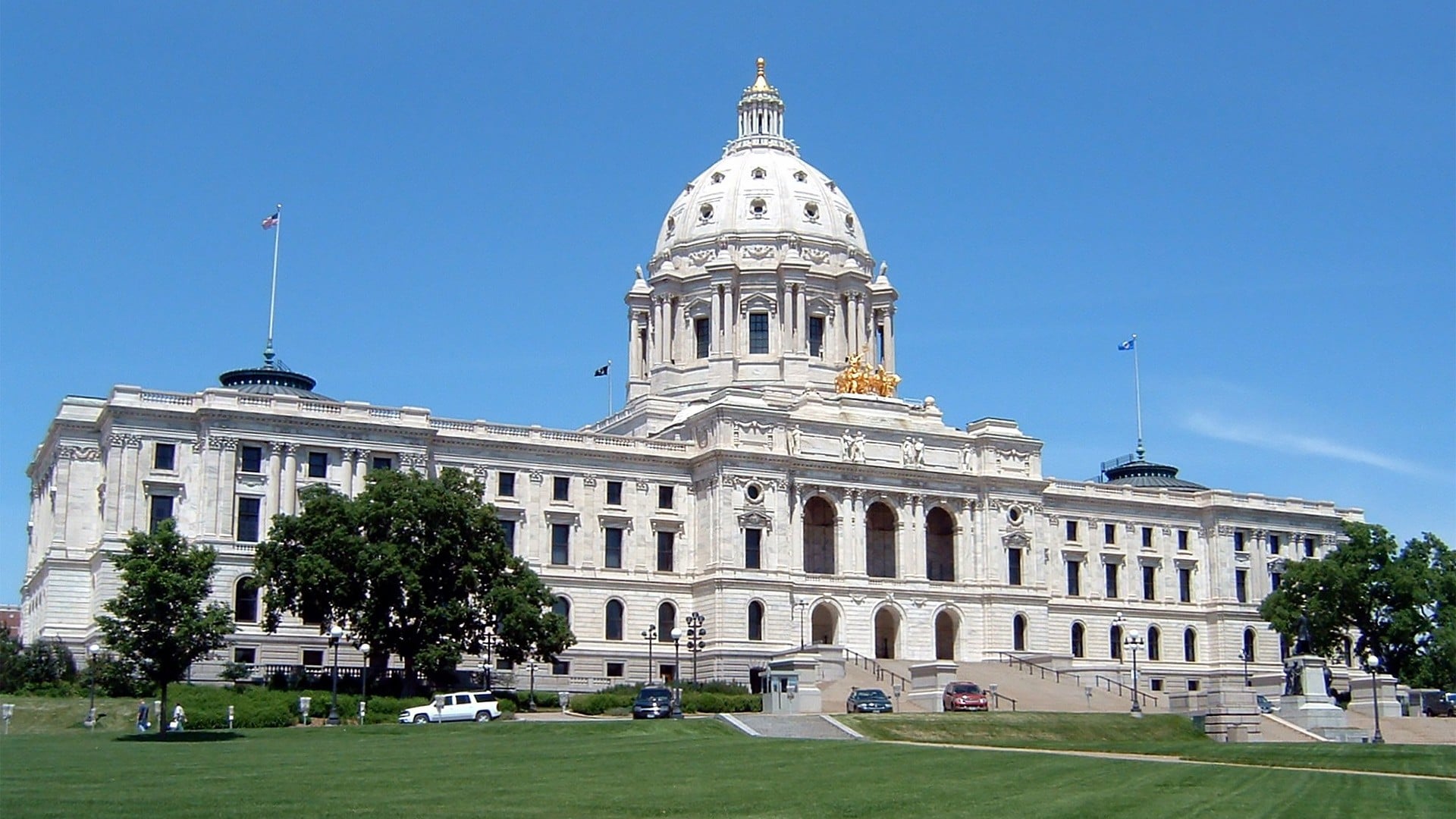
Minnesota lawmakers approved legislation on Tuesday that would ban prediction market operations in the state, potentially making it the first explicit state-level prohibition on the fast-growing industry and setting up a legal clash over federal authority.
The measure, inserted into a broader public safety bill days before the legislature concluded its 2026 session, passed the Minnesota House 100-32 and the Senate 57-9. The legislation now heads to Governor Tim Walz, who is expected to sign the bill or allow it to become law without his signature.
If enacted, the law would take effect on August 1 and prohibit prediction market trades tied to sports, politics, pop culture, and other real-world events.
Supporters of the measure argue that prediction markets amount to gambling activity that should be regulated by states, while opponents argue that federally regulated exchanges fall under the jurisdiction of the Commodity Futures Trading Commission.
Democratic-Farmer-Labor Party Representative Emma Greenman said the bill is intended to preserve Minnesota’s authority over gambling regulation.
“This bill is asserting Minnesotans’ authority to do what we’ve always done, which is to say how best and what regulations we think we should attach to gambling to protect public safety and our kids and the gambling itself,” Greenman said.
Minnesota is one of 11 U.S. states without legal sports betting, though it permits tribal casinos, horse racing, a state lottery, and charitable gaming.
The legislation is expected to trigger lawsuits from prediction market operators or the federal government before the law takes effect.
The CFTC has repeatedly argued that prediction markets fall under federal oversight and that state-level crackdowns violate federal sovereignty.
Platforms including Kalshi, Robinhood, and Crypto.com are already involved in legal disputes with multiple states over the legality of event-based contracts.
Some republican lawmakers criticized both the legislative process and the substance of the measure, arguing the ban would drive activity underground and expose the state to costly litigation.
“Unfortunately, prohibition doesn’t work. If prohibition worked, we’d live in a utopia where we’d prohibit all bad things,” Representative Nolan West said during floor debate. “But when you prohibit things, you just move them into the shadows. That’s what will happen here.”
West also questioned whether Minnesota had the legal authority to restrict federally regulated exchanges.
“This is a very bad idea, chiefly because we do not have the authority as a state to do so,” West said. “Every state that does so is starting to lose that litigation. This is going to cost the state who knows how much in legal fees for no actual gain.”
Prediction markets allow users to trade on the outcomes of elections, sporting events, and other real-world developments. Popular platforms include Kalshi and Polymarket, whose interfaces critics say resemble online sportsbooks.
Supporters of the Minnesota legislation said rapid growth in the sector could increase gambling addiction and financial harm.
“I’m concerned that the rapid increase in access to prediction markets will create a spike in gambling addiction and financial loss, hurting Minnesota families,” Senator John Marty said earlier this month. “It will dramatically cut into the revenue of Minnesota’s regulated gambling, including charitable gambling, casinos, and racetracks.”
The industry has also faced scrutiny over insider trading concerns and market concentration. A Wall Street Journal analysis found that 67% of profits on Polymarket went to just 0.1% of accounts, while unprofitable users on Kalshi outnumbered profitable ones by nearly three to one.
Last month, a U.S. Army special forces soldier was charged with using classified information to place bets tied to a mission involving Venezuelan President Nicolás Maduro.
Both Kalshi and Polymarket have said they are investigating insider trading allegations.
CFTC Commissioner Michael S. Selig defended the platforms in a Wall Street Journal opinion article earlier this month, saying: “These platforms operate as federally regulated exchanges with clearinghouses and comprehensive investor protections, identical to those found in other derivatives markets.”
“The agency has a proven track record in preventing and enforcing actions against insider trading.”
Kalshi spokeswoman Elisabeth Diana criticized the Minnesota legislation in a social media post, calling it “peak hypocrisy” given the state’s existing gambling operations.
Analysts expect the broader legal battle over prediction markets to eventually reach the U.S. Supreme Court because of conflicting rulings emerging from federal appeals courts.
Original article: https://www.yogonet.com/international/news/2026/05/14/120509-minnesota-lawmakers-pass-first-state-ban-on-prediction-markets-setting-up-legal-fight