








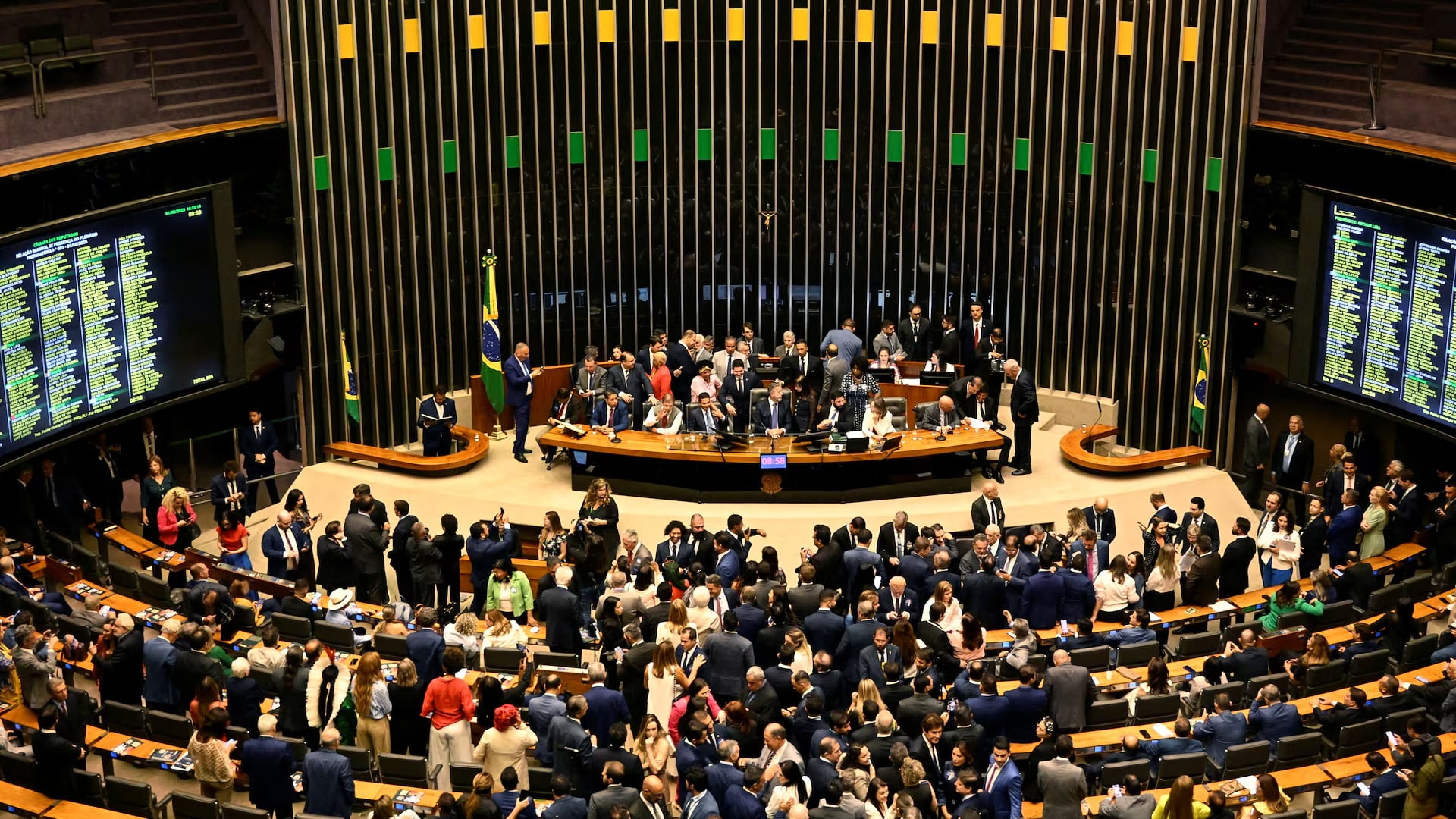
Brazil’s Chamber of Deputies will seek further data from the Ministry of Finance, the Secretariat of Prizes and Betting, and the Central Bank after a public hearing on Thursday exposed deep divisions over the future of fixed-odds betting in the country.
The hearing, held by the Economic Development Committee at the request of Representative Vander Loubet, centered on Bill 180/2026, authored by Representative Pedro Quizai, which proposes banning the operation, offering, promotion, and facilitation of fixed-odds betting nationwide.
According to the Ministry of Finance, 31 million CPF numbers (Brazilian taxpayer ID numbers) are registered on legal betting platforms, equal to about 18% of Brazil’s adult population. Bettors’ actual expenditure, or losses, reached R$ 36.8 billion in 2025, representing 0.5% of the Brazilian family budget.
The debate focused on whether regulation can address consumer harm, public health risks, illegal platforms, and financial losses, or whether a full ban is needed. Representative Vander Loubet, who chaired the hearing, said the issue does not have a simple solution, reports BNL Data.
“No one has a definitive answer. Prohibiting, regulating, or monitoring in isolation doesn’t solve the problem. We need to combine all three and protect the most vulnerable segment of the population,” he said.
Pedro Quizai defended a total ban, arguing that betting harms low-income households. “Who profits from betting? Football teams, companies, and the government. Who loses? Poor families. 62% of bettors earn up to three minimum wages. This money is taken away from food, medicine, and their children’s schooling,” he argued.
Marcelo Kimati Dias, Director of the Mental Health Department at the Ministry of Health, said demand for treatment linked to gambling problems has risen 137% in five years. He said the self-exclusion platform created with the Ministry of Finance has 500 users, only 10% of the potential number of people with gambling disorder.
“People who have problems with gaming rarely seek in-person services. That’s why we created a digital gateway in Meu SUS Digital, with self-testing and referrals,” explained Dias.
Johnatan Faraj, Director-General of Procon-DF, called gamblers “hyper-vulnerable consumers” and criticized betting advertising. “The advertisements show easy winnings, but 90% of people lose. That’s misleading advertising,” he said.
Leandro Lucchesi, General Coordinator of Regulation at the Secretariat of Prizes and Betting, defended regulation and said taxation is broader than the 12% revenue rate, reaching 80% when other taxes are included.
“Before 2018, gambling already existed, but it was invisible. Now we know who gambles, how much they spend, and we can target public policies.”
Ana Bárbara Costa Teixeira, Director of Government Relations at AbraJogo, defended the current framework, citing the removal of more than 48 illegal websites and the blocking of 600 accounts linked to money laundering.
“Most gamblers play recreationally. The problem isn’t the legal activity itself, but the operators who don’t comply with the rules and the illegal market,” she stated.
Bill 180/2026 remains under consideration and will be discussed in further hearings.
Original article: https://www.yogonet.com/international/news/2026/05/29/122188-brazil-hearing-exposes-sharp-split-over-regulation-consumer-harm-in-online-betting