








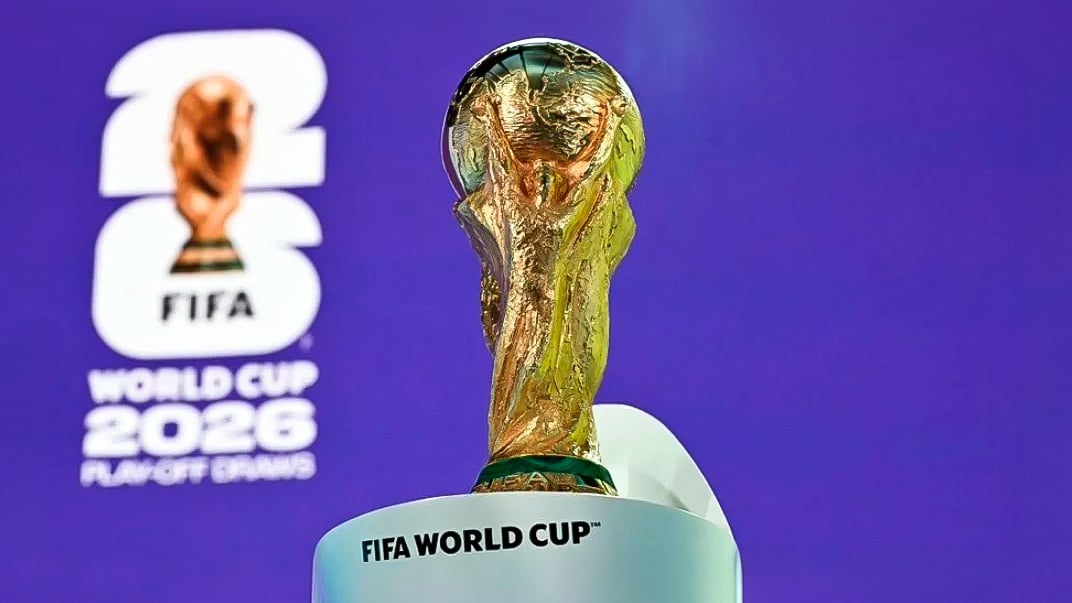
Prediction market trading surged during the World Cup, increasing competitive pressure on traditional U.S. sportsbooks as platforms such as Kalshi rapidly expanded their market share. Prediction markets accounted for around 27% of U.S. legal sports betting volume tied to the World Cup, according to a report from Bloomberg.
Kalshi repeatedly set trading records during the tournament, more than doubling the peak it reached during the New York Knicks’ playoff run and recording trading volumes nearly 10 times higher than earlier this year.
As per H2 Gambling Capital, prediction markets accounted for an estimated 27% of all legal U.S. sports-betting volume during the tournament, a sharp increase from approximately 9% at the beginning of the year. While the comparison is not exact because prediction markets and sportsbooks measure activity differently—and sportsbooks have yet to publish complete tournament figures—the data underscores the rapid expansion of event-based trading platforms.
Data from Apptopia showed that Kalshi’s mobile app attracted more daily users during the tournament than either DraftKings or FanDuel, the two largest U.S. online sportsbooks.
“The growth has put feet to the fire for these traditional sportsbooks to start offering a similar service,” said Ian Moore, an analyst at Bernstein. “It’s a new opportunity for everyone.”
Less than two years ago, prediction markets were prohibited from offering contracts tied to sporting events. Many gambling executives dismissed the sector as a niche business facing significant regulatory hurdles last summer.
The World Cup, however, provided Kalshi and rival Polymarket an opportunity to demonstrate how oversight from the Commodity Futures Trading Commission (CFTC) has enabled them to expand their sports offerings while successfully challenging state-level regulatory efforts aimed at restricting their operations.
Both companies launched aggressive marketing campaigns during the tournament, gaining unprecedented visibility. Kalshi secured advertising space on digital perimeter boards during the latter stages of every World Cup match, a position traditionally dominated by sportsbook operators during major sporting events.
Although prediction-market companies have historically sought to distinguish themselves from sportsbooks, emphasizing that they facilitate trading rather than profit directly from customer losses, the tournament highlighted how closely many of their products now resemble traditional sports wagers.
One of the fastest-growing products was “combo” contracts, prediction-market equivalents of sportsbook parlays that allow traders to combine multiple outcomes into a single, higher-risk position.
Prediction markets also continue to benefit from regulatory differences that distinguish them from sportsbooks. Unlike traditional sports betting operators, federally regulated exchanges can serve customers in states where sports betting remains illegal and generally permit participation by adults aged 18 and older, compared with the 21-and-over requirement that applies to many gambling products.
The changing competitive landscape has prompted sportsbooks to respond. Several operators have introduced their own prediction-market offerings, although adoption has been mixed. FanDuel’s standalone prediction-market app has so far gained limited traction, according to Apptopia.
A FanDuel spokesperson said the company could not discuss market dynamics ahead of its financial results but told Bloomberg that the World Cup generated record customer engagement, with the company’s ten highest-handled soccer matches occurring during this year’s tournament.
The rise of prediction markets has coincided with a difficult period for traditional sportsbook operators. Shares of DraftKings and Flutter Entertainment, FanDuel’s parent company, rallied ahead of the World Cup on expectations of increased betting activity but later retreated during the tournament. Both stocks are down more than 25% for the year.
Despite prediction markets’ rapid expansion, analysts caution that the platforms may still appeal to a different segment of users than conventional sportsbooks.
“It’s pretty clear that prediction markets have had a very good World Cup,” said Ed Birkin, Managing Director at H2 Gambling Capital. “I think they are less of a threat than some people make out, but they are definitely eating around the edges, and these customers will allow them to continue growing their business.”
Kalshi has emerged as the industry’s clear leader, generating more than twice the World Cup trading volume of Polymarket, according to user-compiled data from Dune Analytics.
Polymarket, once the dominant player in the sector, has faced legal challenges, operational setbacks, and delays in expanding its U.S. business.
Competition is also increasing with the arrival of a new prediction-market platform backed by Robinhood Markets and Susquehanna International Group, which attracted notable trading activity during the tournament.
As World Cup trading activity cools following the championship match between Spain and Argentina, prediction-market operators now face the challenge of retaining newly acquired users beyond major sporting events.
Kalshi has previously demonstrated an ability to sustain growth after high-profile events, including the Super Bowl, by offering contracts tied to a broad range of topics beyond sports.
Original article: https://www.yogonet.com/international/news/2026/07/20/125464-prediction-markets-capture-27-of-us-sports-betting-during-world-cup