








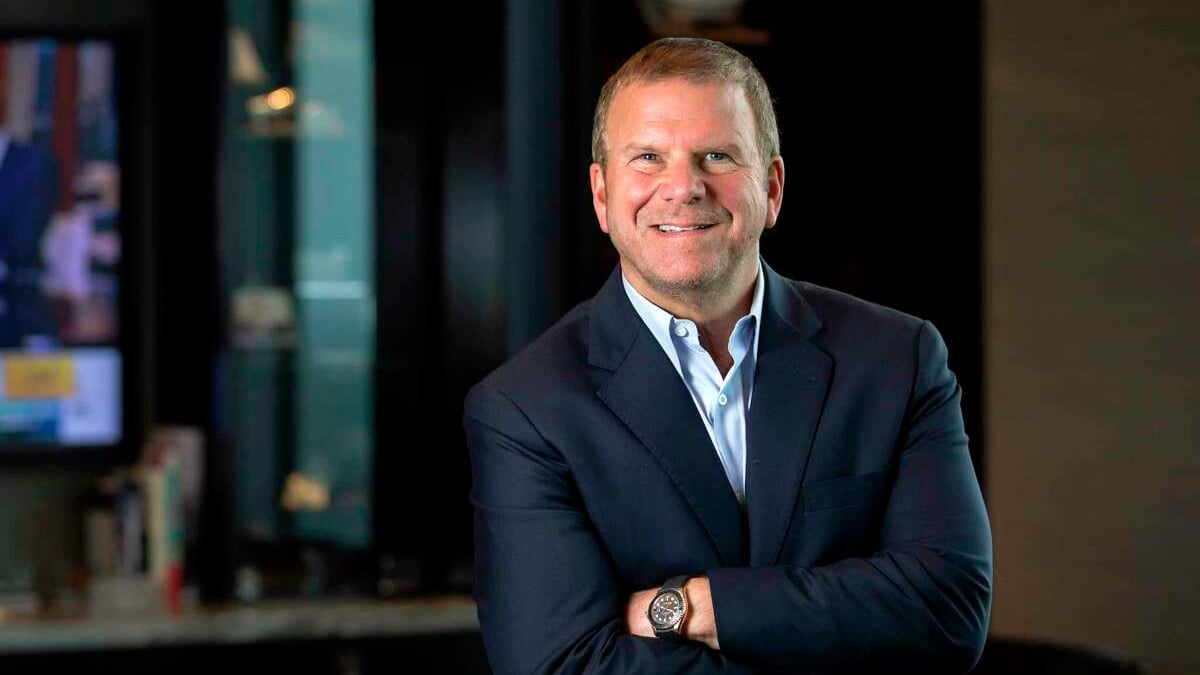
Caesars Entertainment Inc. shareholders will vote Sept. 22 on billionaire Tilman Fertitta’s proposed $17.6 billion acquisition of the casino operator, according to a definitive proxy statement filed with the U.S. Securities and Exchange Commission.
The special shareholder meeting is scheduled for 9 a.m. at the Eldorado Resort & Casino in Reno, reports the Las Vegas Review-Journal. Shareholders of record as of Aug. 21 will vote on Fertitta’s $31-per-share, all-cash offer, which would take Caesars private if approved.
The deal requires approval from holders of a majority of Caesars’ roughly 203.8 million outstanding shares. Caesars’ board has recommended that shareholders approve the transaction.
Recreational Enterprises Inc., controlled by members of the Carano family, has agreed to vote its roughly 8.6 million shares, representing about 4.2% of Caesars’ outstanding stock, in favor of the deal.
Caesars operates more than 50 casino resorts across 16 states, including eight properties on the Las Vegas Strip.
Fertitta, a Texas billionaire currently serving as U.S. ambassador to Italy and San Marino, controls Houston-based Fertitta Entertainment Inc. Its holdings include Landry’s restaurant brands, the NBA’s Houston Rockets, and the Golden Nugget casino business. Fertitta also owns a double-digit stake in Wynn Resorts.
The acquisition is being made through Fertitta Gaming Holdco LLC, a Nevada company formed May 26 specifically for the transaction. Its subsidiary, Empire Merger Sub Inc., would merge into Caesars, leaving Caesars as a wholly owned subsidiary of Fertitta Gaming Holdco.
The transaction would significantly expand Fertitta’s casino holdings and requires gaming approvals in jurisdictions where Caesars operates. Fertitta’s existing Golden Nugget properties could also raise regulatory or competitive considerations in markets where the two companies operate.
In Atlantic City, New Jersey, for example, Fertitta would own four of the city’s nine casinos if the transaction is approved.
Fertitta executives previously estimated the licensing process could take nine to 10 months.
Tuesday’s filing provided new details about the months-long bidding battle between Fertitta and activist investor Carl Icahn, as well as the financing and regulatory hurdles still facing the transaction.
Icahn began with a $28.50-per-share offer in January, while Fertitta entered the bidding days later at $28.75 per share. Both eventually raised their offers to $32 per share, before Icahn initially withdrew in February and Caesars entered exclusive negotiations with Fertitta.
Fertitta later reduced his offer as financing costs and economic uncertainty increased. Caesars rejected his $31-per-share proposal in April and countered at $31.50 before eventually lowering its counteroffer to $31.25. Fertitta declined to increase his offer, and Caesars ultimately accepted $31 per share.
Caesars Chief Financial Officer Bret Yunker estimated in April that financing costs had risen by roughly $40 million annually since the sale process began. Icahn returned on July 10, the final day of Caesars’ 45-day “go-shop” period, with a $34-per-share cash offer.
Despite the higher price, Caesars identified significant challenges with Icahn’s proposal, including high leverage, limited liquidity, and concerns that much of the resulting company’s free cash flow would be needed to service debt. The financing plan also called for significantly lower capital expenditures.
Icahn proposed $6.5 billion in new debt and initially required at least 5 million Caesars shares held by the Carano family to be rolled into the new company.
Jefferies, Icahn’s financial adviser, told Caesars’ advisers that it could not execute the proposed debt commitment without commitments from other investors who had not yet been identified.
Icahn later proposed replacing $1 billion of debt with additional equity, but Caesars said questions about the financing and the resulting company’s financial condition remained unresolved. The Carano family also declined to roll its shares under Icahn’s proposed terms.
Caesars said the financial issues created potential execution risks because gaming regulators scrutinise the financial stability of companies seeking licences. Discussions ended Aug. 10 without an agreement, according to the proxy.
Fertitta’s financing includes commitments for $6.6 billion in senior secured credit facilities and at least $2.7 billion in equity, along with available cash. The debt package includes a $2 billion revolving credit facility and $4.6 billion in term and bridge loans.
The proxy states that Fertitta’s acquisition is not subject to a financing condition, meaning an inability to obtain more favourable financing would not automatically allow him to exit the deal.
Fertitta’s parent company also guarantees obligations under the merger agreement, which includes a $450 million reverse termination fee under certain circumstances if the transaction fails because required regulatory approvals cannot be obtained.
The parties submitted federal antitrust filings on July 13. Fertitta submitted another filing on Aug. 13 following discussions with the Federal Trade Commission. The current review period is expected to end Sept. 14, unless regulators seek further information.
The deal currently has a closing deadline of May 27, 2027. That date can be pushed back to Nov. 27, 2027, if outstanding regulatory approvals have not been obtained.
If the acquisition remains incomplete after June 26, 2027, Caesars shareholders will start receiving additional compensation of $0.00715 per share each day under the agreement.
Original article: https://www.yogonet.com/international/news/2026/08/31/126144-caesars-shareholders-to-vote-on-176-billion-fertitta-takeover-proposal