








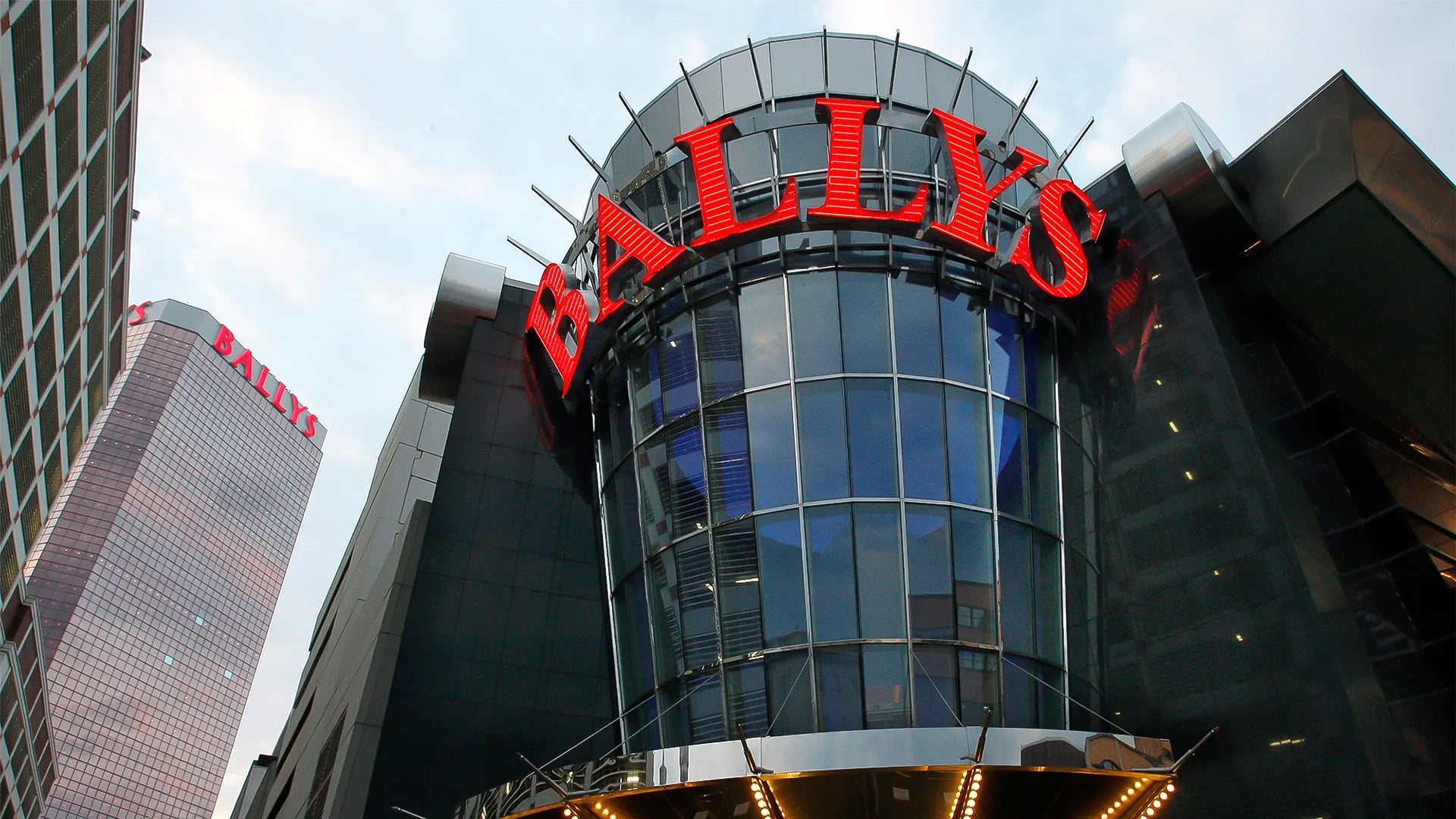
Bally’s Corporation shares fell more than 25% in trading Monday after the operator disclosed in a second-quarter 10-Q filing with the Securities and Exchange Commission that it faces “substantial doubt” about its ability to continue as a going concern. The filing was submitted August 14.
Shares closed Monday at $10.31, down 26% on the day and down 38% year-to-date.
According to the filing, Bally’s does not project that it will satisfy the liquidity maintenance requirement or the consolidated net leverage ratio covenant in its revolving credit facility over the next 12 months.
“While the company is actively engaged in discussions on several financing alternatives, the conditions and events raise substantial doubt about the company’s ability to continue as a going concern,” the filing states.
Bally’s said it is pursuing options “intended to enhance its liquidity, including asset monetization, an equity sale, and debt financings.”
The company entered into a non-binding term sheet in July for a loan to advance its $4 billion Bally’s Bronx project, though it cautioned “there can be no assurance that the plans will be successfully implemented.”
Bally’s ended the quarter with $390.1 million in cash and equivalents against $4.46 billion in long-term net debt.
Company and analyst offer different read on the filing
A company spokesperson, Lauren Westerfield, said the going-concern language “reflects a forward-looking technical accounting analysis and should be understood in that context,” reports The Boston Globe.
She said the analysis “does not take into account anticipated future funding until definitive financing agreements have been executed,” adding that “Bally’s maintains liquid assets that are materially sufficient to meet its obligations should additional liquidity be required.”
Westerfield also said the company “continues to be below Rhode Island’s legislatively mandated leverage ratio and is committed to maintaining that requirement,” and that it “continues to actively manage its capital structure, liquidity, and development commitments across its portfolio.”
Jordan Bender, a senior equity research analyst at Citizens Bank, described the SEC filing as containing “somewhat boilerplate language” that captures only a snapshot of the company at a particular moment and said the disclosures do not “take into account any of its future liquidity or funding.”
Still, in a note to investors, Bender wrote that he does not believe Bally’s “has the ability to finish all of its projects without selling or bringing in a development partner” at its current debt levels.
Bally’s has three substantial developments in progress in the United States: a $1.7 billion permanent casino in Chicago, a $1.19 billion project on the Las Vegas Strip, and Bally’s Bronx, which received one of three New York City casino licenses in December.
Las Vegas plans remain undefined
Bally’s has made limited progress on its Las Vegas Strip site since the former Tropicana was demolished in October 2024. The company has released a single official rendering of the mixed-use project and has indicated since the start of the year that it favors a retail-entertainment district over a casino resort.
That approach has drawn friction in Las Vegas. The MLB’s Athletics franchise is reportedly drawing up contingency plans to build up to $100 million of its own infrastructure on the site while Bally’s construction lags, according to a report from The Athletic.
The Las Vegas Convention and Visitors Authority also pressed Bally’s “pretty pointedly” to present a financing plan by August, per that report.
Bender wrote that Las Vegas “would be the most likely asset to be sold or have a partner brought in,” given the broad language Bally’s has used to describe the site.
Bally’s CEO Robeson Reeves did not reference a Las Vegas casino in the company’s Q2 release, saying instead that Bally’s is in “advanced negotiations with potential partners for exciting retail and entertainment offerings.”
Chicago construction halted a third time
Bally’s halted construction on the non-gaming elements of its Chicago casino earlier this month in response to the city’s legalization of video gaming terminals, marking the third stoppage the project has faced.
The operator has warned that citywide proliferation of the terminals could cost it roughly $70 million a year in revenue and eliminate hundreds of jobs.
Bally’s secured an extension to its temporary Chicago license earlier this year through language in Illinois’ omnibus revenue bill. Without that extension, the operator would have had to close its temporary casino September 9; the permanent casino is not expected to open until early 2027 at the earliest.
Bally’s Q2 release addressed the project in a single sentence: “Construction of Bally’s Chicago continues as we target opening of the permanent casino in early 2027.”
Bronx costs mount ahead of groundbreaking
Bally’s has allocated $615 million toward its Bronx project this year even though construction has not begun — $500 million for the New York license fee and $115 million to the Trump Organization, a payment tied to terms from the 2023 purchase of the site that required Bally’s to pay the sum once granted a casino license.
At $4 billion, Bally’s Bronx costs more than double the Chicago project. The current plan calls for a single-phase build-out completed by 2030, and public application materials indicated construction would begin approximately eight to nine months after licensure — meaning work would need to start this month or next to keep that timeline intact.
Competitor Resorts World New York City is already operating, and the third New York licensee, Hard Rock Metropolitan Park, is also targeting a 2030 opening. That project is larger and more expensive than Bally’s Bronx but carries more financial stability given its ties to New York Mets owner Steve Cohen, whose net worth is estimated at $23 billion.
“We are actively raising additional capital for the further development and construction of the project and have substantial interest from potential partners for both project debt and equity financings,” Reeves said. “In July, we signed a nonbinding term sheet for a pre-construction loan for Bally’s Bronx, and in August we entered into a letter of intent with a potential equity investor.”
Original article: https://www.yogonet.com/international/news/2026/08/19/125965-ballys-shares-fall-26-as-operator-raises-34substantial-doubt-34-over-liquidity